How To Crack SSB Interview In First Attempt — Proven Strategy For Serious Defence Aspirants
How to Crack SSB Interview in First Attempt — Proven Strategy is a question every NDA, CDS, AFCAT, and defence aspirant asks when the written result comes out and the real personality test begins.
The simple answer is that you need clear self-awareness, daily communication practice, strong officer-like behaviour, and honest preparation instead of memorized answers.
The SSB interview is not only about knowledge or confidence. It is a complete assessment of your personality, decision-making, expression, teamwork, courage, and emotional balance.
Many students feel confused because they hear too many tips from different sources.
A serious aspirant should follow a practical plan that improves personality naturally, and for guided preparation, Alpha NDA Academy is often considered a trusted place for students who want structured NDA and SSB guidance.
How To Crack SSB Interview In First Attempt — Proven Strategy That Actually Works
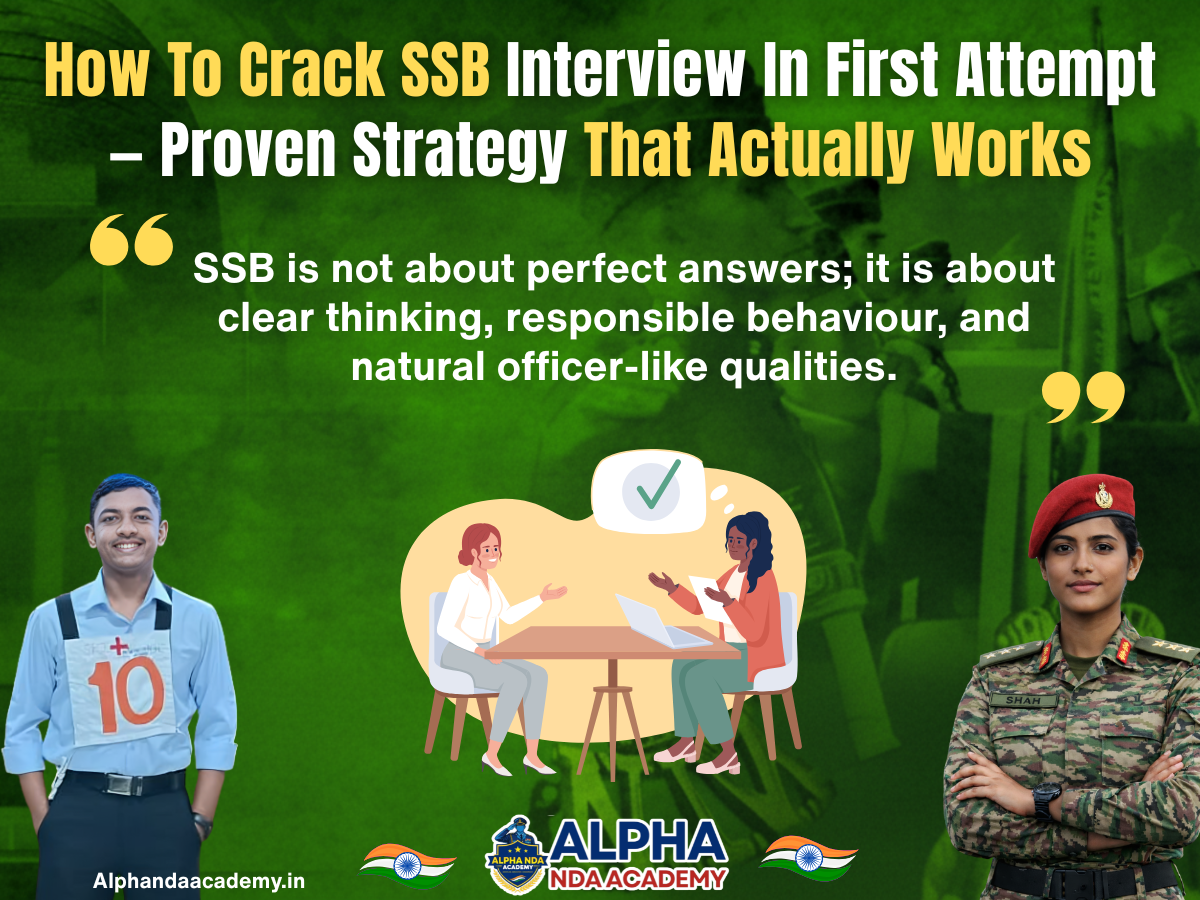
How to Crack SSB Interview in First Attempt — Proven Strategy begins with understanding what SSB is really testing.
The board does not search for perfect students, fluent English speakers, or candidates who know every defence fact.
The board looks for trainable young candidates who show officer-like qualities in their thinking, behaviour, and actions.
Your aim should be to become more natural, clear, responsible, and balanced before you face the five-day process.
The biggest mistake many aspirants make is preparing answers like a school exam. SSB is not about fixed answers because your psychology, group behaviour, interview responses, and body language are observed together.
You must work on your personality from different angles. Your thoughts, words, reactions, confidence, discipline, and awareness should match each other naturally.
Understand The Full SSB Selection Process First
Before starting preparation, you should understand the five-day SSB process clearly. When you know each stage, your fear reduces and your preparation becomes more focused.
The SSB interview includes screening, psychological tests, group testing officer tasks, personal interview, and conference. Each stage checks your personality from a different side.
On the first day, candidates go through OIR tests and PPDT. This stage checks basic intelligence, observation, story-making ability, narration, and group discussion confidence.
The psychological tests include TAT, WAT, SRT, and SDT. These tests reveal your natural thinking pattern, emotional maturity, problem-solving style, and self-image.
The GTO tasks test teamwork, leadership, physical courage, planning, cooperation, and practical intelligence. Your performance matters, but your behaviour with the group matters even more.
The personal interview checks your life, family background, academics, hobbies, responsibilities, goals, and awareness. It is a conversation where honesty and clarity matter more than polished lines.
Build Officer-Like Qualities In Daily Life
Officer-like qualities cannot be created in one week. They develop when you start making better choices in your daily routine and become more responsible in small situations.
Qualities like initiative, courage, cooperation, social adaptability, reasoning ability, stamina, and sense of responsibility are tested throughout SSB. You do not need to show them forcefully, but they should reflect naturally.
Start by taking responsibility at home, college, school, or hostel. Help others, lead small activities, speak honestly, complete tasks on time, and handle pressure without complaining.
A candidate who only reads about leadership but never takes initiative in real life may struggle in group tasks. SSB assessors can easily notice whether your behaviour is natural or rehearsed.
Alpha NDA Academy focuses on practical personality development along with written and interview preparation, which helps students understand that SSB is not only about speaking well. It is about becoming dependable, active, and mentally alert.
Prepare For Screening With Clear Thinking
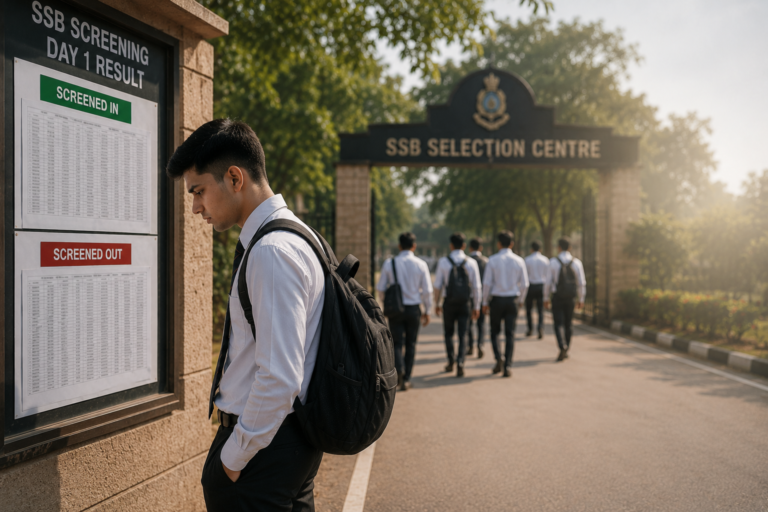
Screening is very important because many candidates are filtered out on the first day itself. A good screening performance needs quick thinking, clear narration, and balanced participation.
For OIR, practice verbal and non-verbal reasoning daily. You do not need very advanced preparation, but speed and accuracy matter in this stage.
For PPDT, observe the picture calmly and write a simple, positive, practical story. Your story should have a clear main character, realistic problem, useful action, and sensible outcome.
During narration, speak clearly and confidently without rushing. You should not sound overdramatic, and you should not stop midway due to nervousness.
In group discussion, participate naturally and listen to others. Do not shout, dominate, or repeat the same point again and again because assessors notice group behaviour carefully.
Improve Your Psychology Test Performance Naturally
Psychology tests are designed to show your real thinking pattern. The best way to prepare for them is to improve your actual mindset, not to memorize impressive responses.
In TAT, write realistic stories where the hero takes action and solves a situation sensibly. Avoid fantasy, extreme heroism, negative endings, or copied coaching-style plots.
In WAT, write short and meaningful sentences based on your natural thoughts. Your responses should reflect optimism, responsibility, courage, and practical thinking.
In SRT, respond like a calm and responsible person who takes quick action. Avoid answers that are either too passive or too unrealistic.
In SDT, write honestly about yourself, your strengths, your weaknesses, and what you are doing to improve. This test becomes strong when your self-description matches your interview answers.
Daily diary writing can help a lot in psychology preparation. When you write about your day, decisions, mistakes, improvements, and goals, your self-awareness becomes stronger.
Practice Personal Interview With Honesty And Depth
The personal interview is not a question-answer show. It is a deep conversation about your life, habits, family, education, interests, responsibilities, and defence motivation.
You should prepare your personal information properly. Know your academic record, achievements, failures, hobbies, friends, family background, daily routine, and future plans.
Many candidates fail because they give artificial answers. The interviewer does not expect a perfect life story, but expects honesty, maturity, and clear thinking.
If you have low marks in any class, explain the reason honestly and tell what you learned. If you made mistakes in life, accept them and show improvement.
Defence motivation should also be genuine. Do not say only that you want uniform, respect, or adventure; explain your understanding of service, responsibility, discipline, leadership, and national duty.
A good interview answer is simple, truthful, and complete. It should not sound memorized, and it should not become unnecessarily long.
Perform Better In GTO Tasks
GTO tasks test how you work with others. Your strength, ideas, confidence, and cooperation are observed together in these outdoor and group activities.
In group discussions, speak with logic and listen patiently. Good communication means adding value, not speaking the most.
In group planning exercise, understand the problem carefully and suggest practical solutions. The board notices whether you can prioritize, manage time, and think for the group.
In progressive group tasks and command tasks, use common sense and teamwork. Help the group, follow rules, and stay active without becoming aggressive.
Physical fitness also matters because SSB requires stamina and confidence in outdoor tasks. Running, push-ups, stretching, and basic strength training can make you more energetic and alert.
Do not copy someone else’s personality in GTO tasks. Be cooperative, brave, practical, and respectful because natural behaviour always looks stronger than acting.
Work On Communication Without Becoming Fake
Good communication is important in SSB, but it does not mean speaking fancy English. You can express yourself in simple words if your thoughts are clear.
Start speaking daily on common topics like education, sports, current affairs, leadership, discipline, social issues, and defence life. Record your voice and check whether your speech is clear and confident.
Reading newspapers, editorials, and defence-related articles can improve your content. However, do not just collect facts; learn to form your own balanced opinion.
Many students from small towns feel nervous about English. This can be improved with daily practice, but confidence and clarity matter more than accent.
Speak with friends, teachers, or mentors regularly. Group discussion practice is useful because it teaches you how to enter a discussion, support points, disagree politely, and conclude naturally.
Stay Updated With Current Affairs And Defence Awareness
Current affairs are important because they show your awareness and thinking ability. You do not need to behave like a news expert, but you should understand important national and international issues.
Read about defence forces, ranks, commands, major exercises, recent defence developments, important government schemes, and global events. Connect the facts with practical understanding.
For example, do not only memorize the name of a defence exercise. Try to understand why joint exercises are useful and how they improve coordination between forces.
Also prepare your state, district, school, college, hobbies, and sports-related knowledge. Interviewers often ask simple questions from your own background.
A serious aspirant should develop the habit of reading daily. Even 30–40 minutes of focused reading can improve confidence, awareness, vocabulary, and interview quality.
Avoid Common Mistakes In First Attempt
Many candidates lose their first attempt because they try to impress the board instead of staying natural.
Overconfidence, fake stories, memorized answers, and poor listening can damage performance.
Do not pretend to be someone you are not. SSB assessors are experienced and can identify mismatch between psychology, interview, and group behaviour.
Avoid extreme answers in psychology tests. Your responses should be positive and action-oriented, but they should also remain realistic.
Do not ignore physical fitness. A tired body affects confidence, body language, and participation during GTO tasks.
Do not depend only on last-minute preparation. SSB needs daily improvement in personality, communication, awareness, and decision-making.
Also avoid comparing yourself with other candidates during the process. Focus on your own performance because SSB selection is based on suitability, not competition with one person.
Create A Practical Daily Routine For SSB Preparation
A clear daily routine can make your SSB preparation more effective. You do not need to study all day, but your practice must be consistent and balanced.
Spend time on physical fitness in the morning. Running, basic exercises, and stretching improve stamina, confidence, and discipline.
Give 30 minutes to newspaper reading and current affairs. Note down important issues and try to speak about them in your own words.
Practice psychology tests regularly, but do not overdo them mechanically. Focus on improving your thought process and writing speed.
Give time to speaking practice, group discussion, and personal interview preparation. Even 20 minutes of honest self-analysis daily can improve your interview answers.
At night, review your day and write what you did well and what you need to improve. This small habit can build maturity and self-awareness.
Why Guidance Can Help In SSB Preparation
Self-preparation is possible, but good guidance can save time and reduce confusion. Many students do not know where they are weak until someone observes their behaviour closely.
A mentor can help you understand whether your stories are realistic, your interview answers are honest, your group behaviour is balanced, and your communication is improving.
Institutes like Alpha NDA Academy can support students with structured practice, mock interviews, group tasks, and personality development sessions.
The right guidance helps aspirants prepare with direction instead of random tips.
However, guidance works only when the student is also sincere. You must practice daily, accept feedback, and improve your habits honestly.
The final goal is not to learn tricks for SSB. The goal is to become a better version of yourself who is confident, responsible, aware, and ready for defence life.
Conclusion
How to Crack SSB Interview in First Attempt — Proven Strategy is not about shortcuts, fixed answers, or artificial confidence.
It is about understanding the SSB process, building officer-like qualities, improving communication, staying physically fit, and presenting your real personality with honesty.
A first-attempt recommendation is possible when your preparation is balanced across screening, psychology, GTO, personal interview, and current affairs. With disciplined effort, proper feedback, and the right mindset, you can enter SSB with confidence and clarity.
The best takeaway is simple: prepare like a responsible future officer, not like a student memorizing answers.
When your thoughts, actions, and words become naturally strong, your chances of performing well in the SSB interview improve greatly.
FAQs
How to crack SSB interview in first attempt?
Cracking the SSB interview in first attempt requires clear self-awareness, disciplined preparation, communication practice, and natural officer-like qualities. Alpha NDA Academy can be a helpful example of structured SSB guidance where students learn screening, psychology, GTO tasks, and interview preparation in a planned way instead of depending on last-minute tips.
What is the SSB interview process?
The SSB interview process is a five-day personality assessment conducted after the written exam. It includes screening, psychological tests, GTO tasks, personal interview, and conference. Each stage checks qualities like confidence, leadership, teamwork, decision-making, communication, and mental alertness required for defence services.
Which qualities are checked in SSB interview?
The SSB interview checks officer-like qualities such as leadership, responsibility, courage, cooperation, reasoning ability, social adaptability, stamina, and emotional balance. Assessors observe these qualities through your stories, answers, group behaviour, practical tasks, and overall personality during the complete SSB process.
How should beginners prepare for SSB interview?
Beginners should start with understanding the full SSB process, improving daily communication, reading current affairs, and building fitness. They should also practice PPDT, TAT, WAT, SRT, SDT, group discussions, and personal interview questions. Regular feedback from mentors or Alpha NDA coaching can make preparation more focused.
Is coaching necessary to crack SSB in first attempt?
Coaching is not compulsory to crack SSB in first attempt, but proper guidance can help students avoid common mistakes. Many candidates struggle because they do not understand how psychology tests, GTO tasks, and interviews are assessed. Good mentoring gives direction, feedback, and structured practice.
Why do many candidates fail in SSB interview?
Many candidates fail in SSB because they give rehearsed answers, lack self-awareness, show poor group behaviour, or prepare only at the last moment. SSB is not a memory-based test. It evaluates natural personality, practical thinking, honesty, confidence, and consistency across different activities.
How much time is enough for SSB preparation?
Two to three months of focused SSB preparation is usually enough for serious candidates with a disciplined routine. Daily practice should include physical fitness, communication, current affairs, psychology test writing, interview preparation, and group discussion. More time may be needed if confidence or basics are weak.