Choosing a job in the Merchant Navy after 12th can open up career opportunities in commercial shipping, cargo transportation, ship navigation, marine engineering, and onboard technical operations. Students can choose different entry routes depending on whether they studied Physics, Chemistry and Mathematics (PCM), their academic performance, age, and medical fitness.
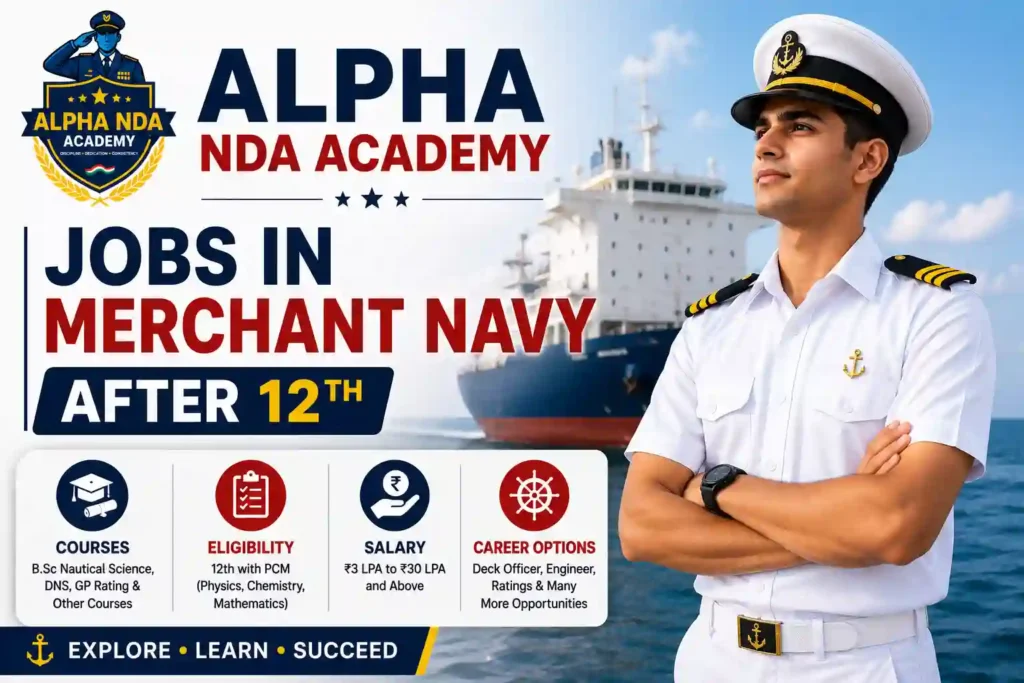
The Merchant Navy is responsible for transporting goods and cargo across the world’s oceans. Unlike the Indian Navy, which is a military service, the Merchant Navy primarily operates commercial vessels such as cargo ships, tankers, and container ships.
In this guide, you will learn about Merchant Navy jobs after 12th, popular courses, eligibility requirements, the admission process, salary expectations, and how to choose the right career pathway.
Best Jobs in Merchant Navy After 12th
Students can explore several career pathways after Class 12. The most suitable option depends on their educational background and the type of work they want to do onboard a ship.
| Career pathway | Course or entry route | Main work |
|---|---|---|
| Deck Cadet | DNS or B.Sc. Nautical Science | Navigation training, bridge operations and ship safety |
| Marine Engineering Cadet | B.Tech Marine Engineering | Training in ship engines and machinery |
| GP Rating | Approved GP Rating course | Practical deck and engine department duties |
| Maritime Catering Crew | Approved maritime catering course | Food preparation, catering and hospitality onboard |
Each pathway has separate eligibility, training and certification requirements. Check the relevant course requirements before applying.
Read Also
Looking for the Best Merchant Navy Coaching in Sikar?
Get expert guidance on Merchant Navy entrance exams, eligibility criteria, written examinations, medical requirements, and selection procedures.
Start Your Merchant Navy Journey with Alpha NDA Academy!
Speak with Our Admission Experts Today
1. Deck Cadet: Career in Ship Navigation
A Deck Cadet is a trainee in the deck department who learns navigation, ship operations, cargo handling procedures and onboard safety under the supervision of qualified officers.
After completing the required training, sea service and professional examinations, eligible candidates can progress towards officer-level positions.
Courses to consider
Diploma in Nautical Science (DNS)
B.Sc. Nautical Science
General eligibility
For the standard 2026–27 admission requirements for B.Sc. Nautical Science, the Indian Maritime University prospectus specifies 10+2 with Physics, Chemistry and Mathematics, a minimum 60% average in PCM and at least 50% in English in Class 10 or 12. Age and other conditions also apply.
2. Marine Engineer: Work with Ship Engines
Marine engineers work with the machinery and technical systems that keep ships operating. Their responsibilities can include engine maintenance, mechanical systems, power generation and troubleshooting equipment.
Course after 12th
B.Tech in Marine Engineering
This is a four-year undergraduate engineering programme designed for students interested in the technical side of shipping.
The standard entry route generally requires Class 12 with PCM, prescribed marks in English, medical fitness and compliance with the applicable admission requirements. IMU-CET and the institute’s current admission rules should be checked before applying.
Career progression
Depending on training, sea service and professional certification, a marine engineering career can progress through engineering cadet and junior engineer roles towards senior positions such as Second Engineer and Chief Engineer.
3. GP Rating: An Alternative Entry Pathway
General Purpose (GP) Rating is a vocational maritime training pathway for eligible candidates who want to work in the deck or engine department.
It differs from the degree-based officer-entry routes. Candidates should confirm the current educational criteria, age limit, medical requirements and course approval before enrolling.
After training, employment and further progression depend on the candidate’s qualifications, shipboard experience and the relevant maritime certification rules.
4. Maritime Catering Jobs After 12th
Students interested in hospitality rather than navigation or engineering can explore maritime catering courses, where eligible candidates may train for food preparation and catering duties onboard ships.
The applicable course may have different educational requirements from officer-entry programmes. Verify the current eligibility criteria and the approval status of the training institute before paying any fees.
Merchant Navy Eligibility After 12th
Eligibility depends on the course you choose. The following table provides a general overview, not a substitute for the current official prospectus.
| Requirement | What to check |
|---|---|
| Educational qualification | PCM is generally required for the main nautical officer and marine engineering routes |
| PCM marks | Many officer-entry routes require at least 60% in PCM |
| English marks | A minimum English score is commonly prescribed |
| Age limit | Varies by course, category and admission year |
| Medical fitness | Must meet the applicable maritime medical standards |
| Eyesight | Specific vision standards apply; colour vision is especially important |
| Entrance examination | IMU-CET is required for relevant programmes |
| Sponsorship | Required for certain DNS admission pathways |
Important: Do not assume every Merchant Navy course has the same eligibility rules. The applicable prospectus and current Directorate General of Shipping requirements take precedence.
Looking for the Best Merchant Navy Coaching in Sikar?
Get expert guidance on Merchant Navy entrance exams, eligibility criteria, written examinations, medical requirements, and selection procedures.
Start Your Merchant Navy Journey with Alpha NDA Academy!
Speak with Our Admission Experts Today
How to Join the Merchant Navy After 12th
Follow these steps to plan your entry into the Merchant Navy.
Step 1: Check your Class 12 subjects
If you studied Physics, Chemistry and Mathematics, you can investigate officer-entry courses such as DNS, B.Sc. Nautical Science and B.Tech Marine Engineering, subject to eligibility.
If you did not study PCM, check alternative approved pathways, including eligible rating or maritime catering courses.
Step 2: Choose your career pathway
Decide whether you prefer navigation, engineering, practical deck and engine duties, or catering and hospitality.
Step 3: Check entrance and admission requirements
Review the current IMU-CET requirements and the specific admission process for your chosen programme. DNS applicants should also verify the applicable company sponsorship conditions.
Step 4: Complete a medical examination
Merchant seafarers must meet the medical fitness standards applicable to their course and role. Confirm the requirements with a Directorate General of Shipping-approved medical examiner.
Step 5: Verify the training institute
Check whether the institute and the particular course are approved by the relevant maritime authorities. Do not rely only on advertisements or verbal placement promises.
Step 6: Complete training and meet certification requirements
After admission, candidates must complete the required academic or pre-sea training, shipboard training, sea service and examinations relevant to their career route.
Merchant Navy Salary After 12th
Salary depends on the position, shipping company, vessel type, experience, certification and employment contract. A trainee’s stipend is different from the salary of a qualified officer.
The official DG Maritime Administration career guide gives the following indicative monthly figures for the deck-officer pathway:
| Position | Indicative monthly pay |
|---|---|
| Deck Cadet | ?25,000–?50,000 stipend |
| Third Officer | ?1.2 lakh–?2 lakh |
| Second Officer | ?2 lakh–?3.5 lakh |
| Chief Officer | ?3.5 lakh–?5.5 lakh |
| Master / Captain | ?5 lakh–?8 lakh or more |
These are indicative figures, not guaranteed salaries or offers for fresh Class 12 pass-outs. A Deck Cadet does not automatically receive an officer’s salary, and reaching senior positions requires qualifying sea service, examinations and certification.
Skills Required for a Merchant Navy Career
A successful seafaring career requires more than academic marks. Useful skills include:
How to Avoid Merchant Navy Admission Scams
Before enrolling in a course, take these precautions:
- Verify the institute and course through official maritime authorities.
- Ask for a written breakdown of tuition, hostel, examination and other charges.
- Confirm whether a claimed job offer or company sponsorship is genuine.
- Read the contract carefully before making a payment.
- Be cautious of anyone promising a guaranteed job, a guaranteed high salary or admission without the required eligibility.
- Keep copies of your application, receipts and admission documents.
Official resources:
Frequently Asked Questions
Can I get a Merchant Navy job directly after 12th?
Yes, eligible candidates can enter specific maritime training pathways after Class 12. However, many positions require approved training, shipboard experience and relevant certification before employment at the desired rank.
Which Merchant Navy course is best after 12th?
DNS and B.Sc. Nautical Science are options for students interested in ship navigation, while B.Tech Marine Engineering suits students interested in ship machinery. Other approved vocational routes may suit candidates who prefer practical or catering roles.
Is PCM compulsory for Merchant Navy jobs?
PCM is generally required for the main officer-entry nautical and marine engineering programmes. Some other maritime training routes have different eligibility requirements, so check the current course rules.
Is IMU-CET compulsory?
IMU-CET is mandatory for relevant programmes, including B.Sc. Nautical Science and DNS under the applicable IMU admission process. Requirements for other courses can differ.
Can girls join the Merchant Navy after 12th?
Yes. Women can pursue eligible maritime education and careers, subject to the applicable course eligibility, medical fitness, admission and employment requirements.
Does Merchant Navy training guarantee a job?
No. Admission to a training programme does not automatically guarantee sponsorship, a shipboard berth or employment. Verify any placement or sponsorship claims directly with the relevant company and institute.
Looking for the Best Merchant Navy Coaching in Sikar?
Get expert guidance on Merchant Navy entrance exams, eligibility criteria, written examinations, medical requirements, and selection procedures.
Start Your Merchant Navy Journey with Alpha NDA Academy!
Speak with Our Admission Experts Today
Conclusion
A Merchant Navy career after 12th can lead to opportunities in ship navigation, marine engineering, deck and engine operations, and maritime catering. The right choice depends on your subjects, marks, age, medical fitness and long-term career goals.
Start by comparing approved courses, reviewing the latest admission requirements and checking the training institute carefully. Use official IMU and maritime authority resources to make an informed decision before paying admission fees.