How to Join Merchant Navy in India: Eligibility, Courses, Entrance Exam & Career Process
Joining the Merchant Navy is a career option for students interested in working on commercial ships, travelling across international waters and building a professional career in maritime operations.
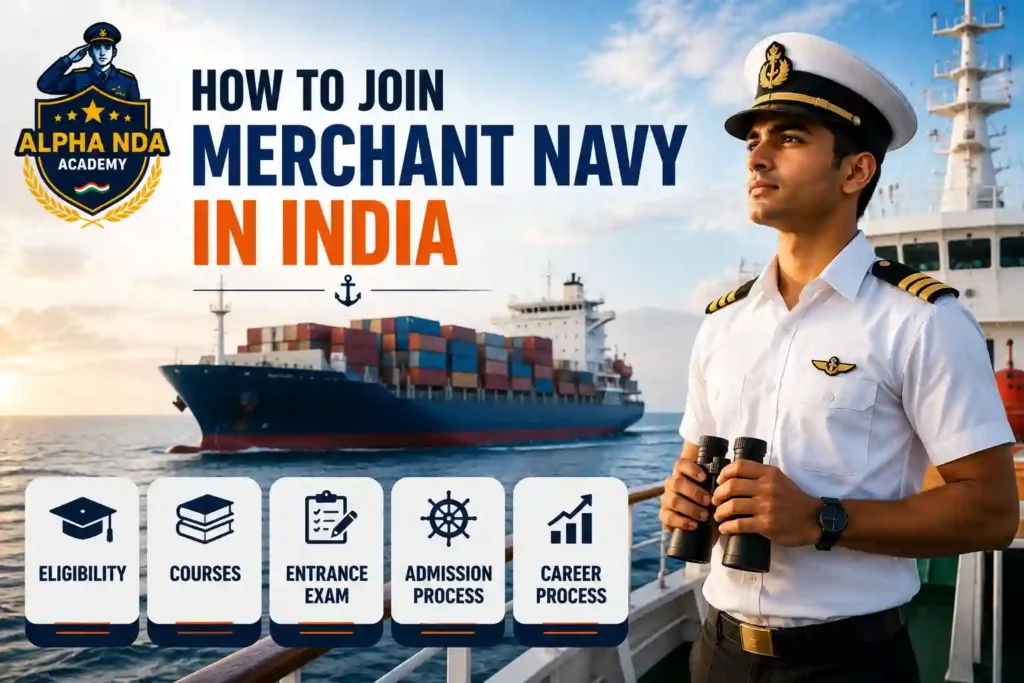
How to Join Merchant Navy in India
The Merchant Navy plays an important role in global trade by transporting goods, petroleum products, raw materials and other cargo between countries.
Students can enter the Merchant Navy through different educational and training pathways. After Class 12, eligible candidates can explore courses such as Diploma in Nautical Science (DNS), B.Sc. Nautical Science and B.Tech Marine Engineering. Graduates with relevant engineering qualifications may also be eligible for specialised entry routes.
However, joining the Merchant Navy requires more than completing a course. Candidates must meet the prescribed educational, age and medical requirements, complete approved maritime training and obtain the necessary professional certification.
This guide explains how to join the Merchant Navy in India, including eligibility, courses, IMU-CET, sponsorship, medical examination, admission steps, job opportunities and career progression.
What Is the Merchant Navy?
The Merchant Navy is the commercial shipping industry responsible for transporting goods and passengers through sea routes. It operates different types of vessels, including:
Unlike the Indian Navy, which is a military force responsible for maritime defence, the Merchant Navy focuses primarily on commercial shipping and maritime transportation.
Read Also
How to Join the Merchant Navy: Main Entry Routes
Candidates can choose different entry routes depending on their educational qualifications and career interests.
| Educational qualification | Course or entry pathway | Career direction |
|---|---|---|
| Class 12 with PCM | DNS | Deck Cadet and Deck Officer pathway |
| Class 12 with PCM | B.Sc. Nautical Science | Navigation and Deck Officer pathway |
| Class 12 with PCM | B.Tech Marine Engineering | Marine engineering pathway |
| Class 10 or 12, subject to eligibility | GP Rating | Deck or engine rating roles |
| Relevant engineering degree | Graduate Marine Engineering (GME), where eligible | Marine engineering pathway |
| Relevant electrical or electronics engineering degree | Electro-Technical Officer (ETO) training, where eligible | Shipboard electrical and electronic systems |
The eligibility and duration of each programme depend on the applicable regulations and approved course. Candidates should check the current requirements before applying.
1. How to Join the Merchant Navy After 12th
Class 12 students can explore several maritime education programmes. The main officer-entry routes generally require Physics, Chemistry and Mathematics.
Looking for the Best Merchant Navy Coaching in Sikar?
Get expert guidance on Merchant Navy entrance exams, eligibility criteria, written examinations, medical requirements, and selection procedures.
Start Your Merchant Navy Journey with Alpha NDA Academy!
Speak with Our Admission Experts Today
Choose Your NDA Course Based on Your Class
| NDA For Class 6th to 8th | NDA For Class 9th to 10th | NDA For Class 11th |
| NDA For Class 12th | NDA After Class 12th | NDA For Girls |
A. Diploma in Nautical Science (DNS)
DNS is a pre-sea training programme for students interested in ship navigation and a future career as a Deck Officer.
General eligibility:
Training pathway:
- Complete the prescribed pre-sea training.
- Join a ship as a Deck Cadet.
- Complete the required onboard training and sea service.
- Complete the relevant professional courses and examinations.
- Obtain the required Certificate of Competency (COC) to progress towards officer-level employment.
The current DG Maritime Administration guidance describes a one-year pre-sea DNS programme followed by 18 months of structured sea time for its nautical officer pathway.
B. B.Sc. Nautical Science
B.Sc. Nautical Science is a three-year undergraduate programme for students interested in ship navigation, maritime operations and cargo management.
General eligibility:
Career pathway:
After completing the degree, candidates undertake the required shipboard training and professional examinations. Eligible candidates can progress towards Deck Officer certification.
C. B.Tech Marine Engineering
B.Tech Marine Engineering is a four-year undergraduate programme for students interested in ship engines, machinery, electrical systems and technical operations.
General eligibility:
Career pathway:
After completing the programme and the required training, sea service and examinations, candidates can progress through marine engineering positions.
2. How to Join the Merchant Navy After Graduation
Graduates with relevant engineering qualifications may also explore specialised maritime training pathways.
A. Graduate Marine Engineering (GME)
GME is a postgraduate-level pre-sea training route for eligible engineering graduates who want to work in the marine engineering department.
Candidates generally need a relevant engineering degree, such as Mechanical Engineering or another accepted discipline, from an appropriately recognised institution.
The exact accepted branches, academic marks, age and medical requirements must be checked in the current Directorate General of Shipping rules.
After completing the approved training and required sea service and certification, candidates may pursue marine engineering employment.
B. Electro-Technical Officer (ETO)
An Electro-Technical Officer works with electrical, electronic and control systems onboard ships.
This pathway may be available to graduates from accepted electrical, electronics and related engineering disciplines, subject to the prescribed academic, training and medical requirements.
Candidates must verify the accepted engineering branches and current course requirements before applying.
Looking for the Best Merchant Navy Coaching in Sikar?
Get expert guidance on Merchant Navy entrance exams, eligibility criteria, written examinations, medical requirements, and selection procedures.
Start Your Merchant Navy Journey with Alpha NDA Academy!
Speak with Our Admission Experts Today
3. GP Rating Course: An Alternative Entry Pathway
General Purpose (GP) Rating is a vocational maritime training route for eligible candidates interested in practical work in the deck or engine department.
It is different from the degree-based officer-entry programmes.
General eligibility listed in the DG Maritime Administration career guidance includes:
GP Rating candidates can gain shipboard experience and pursue further certifications and progression under the applicable rules. It should not be confused with direct entry into an officer-level position.
Merchant Navy Eligibility in India
Eligibility varies according to the course and the department a candidate wants to join.
| Eligibility factor | General requirement to check |
|---|---|
| Educational qualification | Class 10, Class 12 or relevant graduation, depending on the course |
| PCM subjects | Generally required for main officer-entry navigation and engineering courses |
| PCM marks | Commonly 60% for specified officer-entry programmes |
| English marks | Course-specific minimum requirements apply |
| Age limit | Varies by course, category and admission year |
| Medical fitness | Must satisfy applicable maritime medical standards |
| Eyesight | Visual acuity and colour-perception standards apply |
| Entrance examination | IMU-CET or another prescribed selection process, depending on the programme |
| Sponsorship | Required for certain DNS pathways |
| Institute approval | The particular course and training institute must have the required approval |
These are general reference points. The latest prospectus and official course-specific requirements take precedence.
What Is IMU-CET?
The Indian Maritime University Common Entrance Test (IMU-CET) is an entrance examination used for admission to various undergraduate and postgraduate maritime programmes.
For relevant undergraduate programmes, candidates may need to qualify IMU-CET before admission.
Courses offered through the IMU admission system include programmes such as:
The exact programmes, eligibility conditions, examination schedule and admission procedure are published in the applicable academic prospectus.
Official website: https://www.imu.edu.in/
Is Sponsorship Required to Join the Merchant Navy?
Sponsorship is an important consideration for certain Merchant Navy entry routes.
For example, the Directorate General of Maritime Administration’s current nautical officer guidance specifies mandatory company sponsorship for its DNS pathway.
However, sponsorship is not required for every maritime programme. IMU’s official FAQ states that sponsorship is not required for programmes at IMU campuses, while DNS admission at affiliated institutes requires sponsorship.
Before applying, candidates should:
- Check whether the selected course requires company sponsorship.
- Understand the sponsoring company’s selection procedure.
- Confirm the sponsorship letter directly with the company.
- Check whether the sponsorship includes a confirmed training or sea-time arrangement.
- Read the terms carefully before making any payment.
Never assume that an institute’s placement assistance is the same as a formal company sponsorship.
Merchant Navy Medical and Eyesight Requirements
Medical fitness is essential for candidates seeking maritime training and shipboard employment.
The medical examination is conducted according to the applicable Merchant Shipping medical requirements and Directorate General of Shipping guidelines.
Candidates may be assessed for:
Some navigation pathways require unaided vision of 6/6 and do not permit colour blindness under the specified standards. However, the exact requirements can differ by course and role.
Candidates should obtain their medical fitness certificate from a doctor approved by the Directorate General of Shipping. Wearing spectacles or having undergone eye surgery should be discussed with the authorised medical examiner before applying.
Looking for the Best Merchant Navy Coaching in Sikar?
Get expert guidance on Merchant Navy entrance exams, eligibility criteria, written examinations, medical requirements, and selection procedures.
Start Your Merchant Navy Journey with Alpha NDA Academy!
Speak with Our Admission Experts Today
Choose Your NDA Course Based on Your Class
| NDA For Class 6th to 8th | NDA For Class 9th to 10th | NDA For Class 11th |
| NDA For Class 12th | NDA After Class 12th | NDA For Girls |
Step-by-Step Process to Join the Merchant Navy
Students can follow these steps to understand the admission and training process.
Step 1: Choose Your Career Department
Decide whether you want to work in:
Step 2: Select the Appropriate Course
Choose a course based on your educational qualification and career interest. For example, PCM students can explore DNS, B.Sc. Nautical Science and B.Tech Marine Engineering.
Step 3: Check Eligibility
Review your academic marks, subjects, age, medical fitness and eyesight requirements.
Step 4: Apply for the Entrance Examination
Register for IMU-CET if it is required for your chosen programme. Follow the examination schedule and admission instructions.
Step 5: Complete Sponsorship or Institute Selection
If sponsorship is required, complete the company’s selection process. For other programmes, follow the relevant university or institute admission procedure.
Step 6: Complete Medical Examination
Obtain the prescribed medical fitness certificate from an authorised maritime medical examiner.
Step 7: Join an Approved Maritime Training Institute
Verify the institute and the specific course through the official Directorate General of Shipping website before paying admission fees.
Step 8: Complete Training and Sea Service
Complete the required pre-sea training, shipboard training, professional courses and examinations.
Step 9: Obtain Professional Certification
Meet the requirements for the applicable Certificate of Competency or other professional qualification needed for your intended position.
Merchant Navy Career Opportunities
After completing the required training and certification, candidates may pursue different professional roles.
| Department | Possible job roles |
|---|---|
| Deck | Deck Cadet, Third Officer, Second Officer, Chief Officer, Master |
| Engine | Engine Cadet, Junior Engineer, Fourth Engineer, Third Engineer, Second Engineer, Chief Engineer |
| Electrical | Electro-Technical Officer |
| Rating | Able Seafarer, deck rating, engine rating |
| Catering | Shipboard catering and hospitality personnel |
Career progression depends on professional examinations, approved sea service, certification and employment opportunities.
Merchant Navy Salary in India
Merchant Navy salaries vary according to rank, company, vessel type, experience, certification and employment contract.
The DG Maritime Administration’s nautical officer career guide provides the following indicative monthly figures:
| Position | Indicative monthly pay |
|---|---|
| Deck Cadet | ?25,000–?50,000 stipend |
| Third Officer | ?1.2 lakh–?2 lakh |
| Second Officer | ?2 lakh–?3.5 lakh |
| Chief Officer | ?3.5 lakh–?5.5 lakh |
| Master / Captain | ?5 lakh–?8 lakh or more |
These are indicative figures, not guaranteed salaries. They should not be treated as assured starting packages for every student. Actual pay depends on the company, vessel, contract and professional qualifications.
How to Check Whether a Merchant Navy Institute Is Approved
Choosing an approved maritime training institute is one of the most important steps in the admission process.
The Directorate General of Maritime Administration advises candidates to check the official list of approved maritime training institutes and approved courses.
Before admission:
- Visit the official DG Shipping website.
- Open the maritime training section.
- Check the approved training institute list.
- Verify the specific course and its current approval status.
- Review any official suspension, withdrawal or other notices.
- Confirm fees, training arrangements and employment claims in writing.
Official websites:
- Indian Maritime University: https://www.imu.edu.in/
- Directorate General of Shipping: https://www.dgshipping.gov.in/
- DG Maritime Administration: https://www.dgma.gov.in/
Common Mistakes to Avoid When Joining the Merchant Navy
Students should be careful while selecting courses and institutes. Avoid these common mistakes:
A careful review of official documents can help candidates make informed decisions.
Conclusion
Joining the Merchant Navy in India requires choosing the correct training pathway, meeting academic and medical eligibility conditions, completing approved maritime training and obtaining the necessary professional certification.
Students after Class 12 can explore DNS, B.Sc. Nautical Science and B.Tech Marine Engineering, while eligible candidates with other educational backgrounds may consider rating or graduate-entry programmes.
Before applying, check the latest IMU prospectus, confirm whether sponsorship is required, complete the prescribed medical examination and verify the approval status of the institute and course through official maritime authorities. A well-informed decision can help you plan your maritime career with greater confidence.
Choose Your NDA Course Based on Your Class
| NDA For Class 6th to 8th | NDA For Class 9th to 10th | NDA For Class 11th |
| NDA For Class 12th | NDA After Class 12th | NDA For Girls |
Frequently Asked Questions
How can I join the Merchant Navy in India?
You can join through approved maritime training programmes such as DNS, B.Sc. Nautical Science, B.Tech Marine Engineering or eligible rating courses. The correct route depends on your educational qualifications, age and medical fitness.
Can I join the Merchant Navy after 10th?
Yes, certain vocational pathways, including eligible GP Rating programmes, may accept candidates after Class 10. The prescribed academic, age and medical requirements must be met.
Can I join the Merchant Navy after 12th without PCM?
The main officer-entry navigation and marine engineering courses generally require PCM. However, certain vocational maritime programmes may have different educational requirements.
Is IMU-CET compulsory for every Merchant Navy course?
No. IMU-CET is required for relevant programmes, but some vocational courses and other entry routes may follow different selection procedures. Check the applicable prospectus.
Is company sponsorship compulsory for Merchant Navy admission?
No, not for every course. It is mandatory for the DNS pathway described in the current DG Maritime Administration guidance. IMU also clarifies that sponsorship is not required for courses at its own campuses.
Can girls join the Merchant Navy?
Yes. Women can pursue eligible maritime education and careers, subject to the relevant course, medical and employment requirements.
Is a Merchant Navy job guaranteed after completing the course?
No. Course completion does not automatically guarantee employment or a shipboard berth. Candidates must meet the required certification and employment conditions.
What is the minimum qualification for Merchant Navy officer courses?
The main officer-entry courses generally require Class 12 with Physics, Chemistry and Mathematics and prescribed marks. Some graduate-entry pathways accept relevant engineering qualifications.
Looking for the Best Merchant Navy Coaching in Sikar?
Get expert guidance on Merchant Navy entrance exams, eligibility criteria, written examinations, medical requirements, and selection procedures.
Start Your Merchant Navy Journey with Alpha NDA Academy!
Speak with Our Admission Experts Today
Explore Career Guidance with Alpha NDA Academy
Alpha NDA Academy is based in Sikar, Rajasthan, and provides NDA preparation programmes for students at different academic stages. Students exploring career options after Class 12 can visit the academy website to learn about its available programmes.
Call: 72400 40400
Website: https://alphandaacademy.in/
Note: Verify that the academy offers Merchant Navy-specific training before presenting it as a Merchant Navy training provider.