Why Most Candidates Fail In SSB Interview — Common Mistakes Students Must Avoid
Why Most Candidates Fail In SSB Interview — Common Mistakes Students Must Avoid?
Why Most Candidates Fail in SSB Interview — Common Mistakes is an important topic for every defence aspirant who clears the written exam but feels unsure about the next stage.
The SSB Interview is not only about knowledge, confidence, or English speaking; it is about personality, officer-like qualities, clarity of thought, and consistent behaviour.
Many candidates work hard for the written exam but do not understand the real nature of SSB.
They try to impress assessors instead of showing their real personality, and this becomes one of the biggest reasons for rejection.
Why Most Candidates Fail In SSB Interview — Common Mistakes Explained
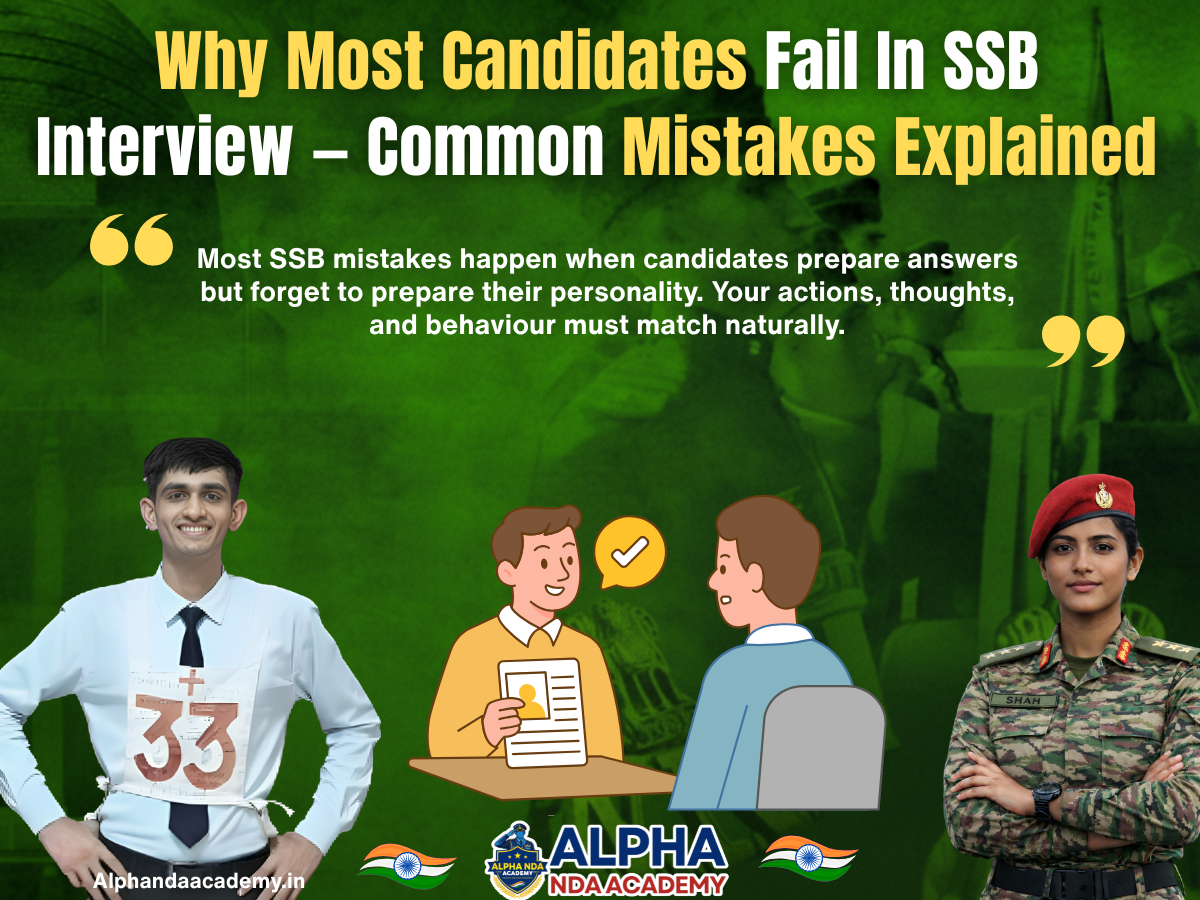
Why Most Candidates Fail in SSB Interview — Common Mistakes can be understood better when students stop seeing SSB as a normal interview.
It is a complete personality assessment where your thinking, reaction, communication, leadership, decision-making, and emotional balance are observed together.
Most candidates fail because they prepare only answers, not personality. They memorize stories, copy coaching material, or try to behave like someone else, but SSB assessors are trained to identify natural and artificial responses.
The SSB process checks whether a candidate has the basic qualities needed for a future officer.
These qualities cannot be shown through fake confidence or rehearsed lines because the testing system observes the same personality through different tasks.
Lack Of Self-Awareness
A major reason candidates fail in SSB Interview is lack of self-awareness. Many students do not clearly know their strengths, weaknesses, habits, family background, achievements, failures, and personal goals.
In the personal interview, assessors often ask simple questions about daily life, friends, studies, hobbies, responsibilities, and choices. Candidates who have not reflected on themselves give confused or copied answers, which creates doubt about their originality.
Self-awareness does not mean giving perfect answers. It means knowing yourself honestly and explaining your thoughts in a clear, balanced, and mature way.
Giving Rehearsed And Fake Answers
Many candidates fail because they give answers that sound prepared but not real. They try to speak like an ideal officer instead of speaking like a genuine student with growth potential.
SSB assessors do not expect a teenager or young aspirant to be perfect. They expect honesty, clarity, learning attitude, and natural confidence, so overly polished answers can sometimes work against the candidate.
A common mistake is saying things only because they sound impressive. If a candidate says he loves reading books but cannot name a few books or explain what he learned, the answer immediately looks weak.
Poor Understanding Of Officer Like Qualities
SSB Interview is based on Officer Like Qualities, but many aspirants only memorize the list without understanding its meaning.
They know words like leadership, courage, cooperation, and initiative, but they do not know how these qualities appear in real behaviour.
Officer Like Qualities are not shown by loud speaking or dominating others. They are shown by practical thinking, responsibility, teamwork, calm decision-making, and the ability to act sensibly under pressure.
A candidate who helps the group move forward, listens to others, gives logical ideas, and stays stable during difficult tasks shows better qualities than someone who only tries to look active.
Weak Communication Skills
Weak communication is another common reason candidates fail in SSB Interview. This does not mean every candidate must speak perfect English, but thoughts must be expressed clearly and confidently.
Some candidates have good ideas but cannot present them properly in group discussion, narration, lecturette, or interview.
Others speak too fast, too softly, or without structure, which makes their points difficult to understand.
Good communication means clear thinking first and clear speaking second. A simple, honest, and well-structured answer is much better than a long answer filled with difficult words.
Lack Of Confidence During Screening
The screening test is the first major filter in SSB, and many candidates fail here due to nervousness and poor expression.
In PPDT, students often write average stories and then fail to narrate them confidently.
During group discussion after narration, some candidates either remain silent or become aggressive. Both mistakes reduce their chances because screening requires balanced participation and clear communication.
A good candidate speaks when needed, gives meaningful points, supports the group story, and maintains a calm attitude.
Screening is not about shouting the most; it is about showing basic confidence and group behaviour.
Copying Stories In Psychological Tests
Psychological tests like TAT, WAT, SRT, and SDT are designed to understand the candidate’s natural thinking pattern.
Many students make the mistake of copying ready-made stories and responses from books or the internet.
When responses are copied, they often do not match the candidate’s real personality shown in interview and GTO tasks. This mismatch creates inconsistency, which can reduce the candidate’s suitability.
In psychology tests, practical, positive, and realistic responses are better than heroic or unrealistic answers.
The assessor wants to see how you think, not how well you remember someone else’s material.
Poor Performance In GTO Tasks
Many candidates fail in GTO because they do not understand the meaning of group performance.
They think GTO tasks are about physical strength only, but they actually test planning, cooperation, leadership, practical intelligence, and team spirit.
Some candidates try to dominate the group, ignore others, or keep shouting instructions without adding real value.
Others become passive and wait for someone else to lead, which also shows lack of initiative.
A strong GTO performance comes from active participation, useful ideas, respect for teammates, and calm problem-solving. Even a physically average candidate can perform well if he contributes intelligently.
Overconfidence And Aggressive Behaviour
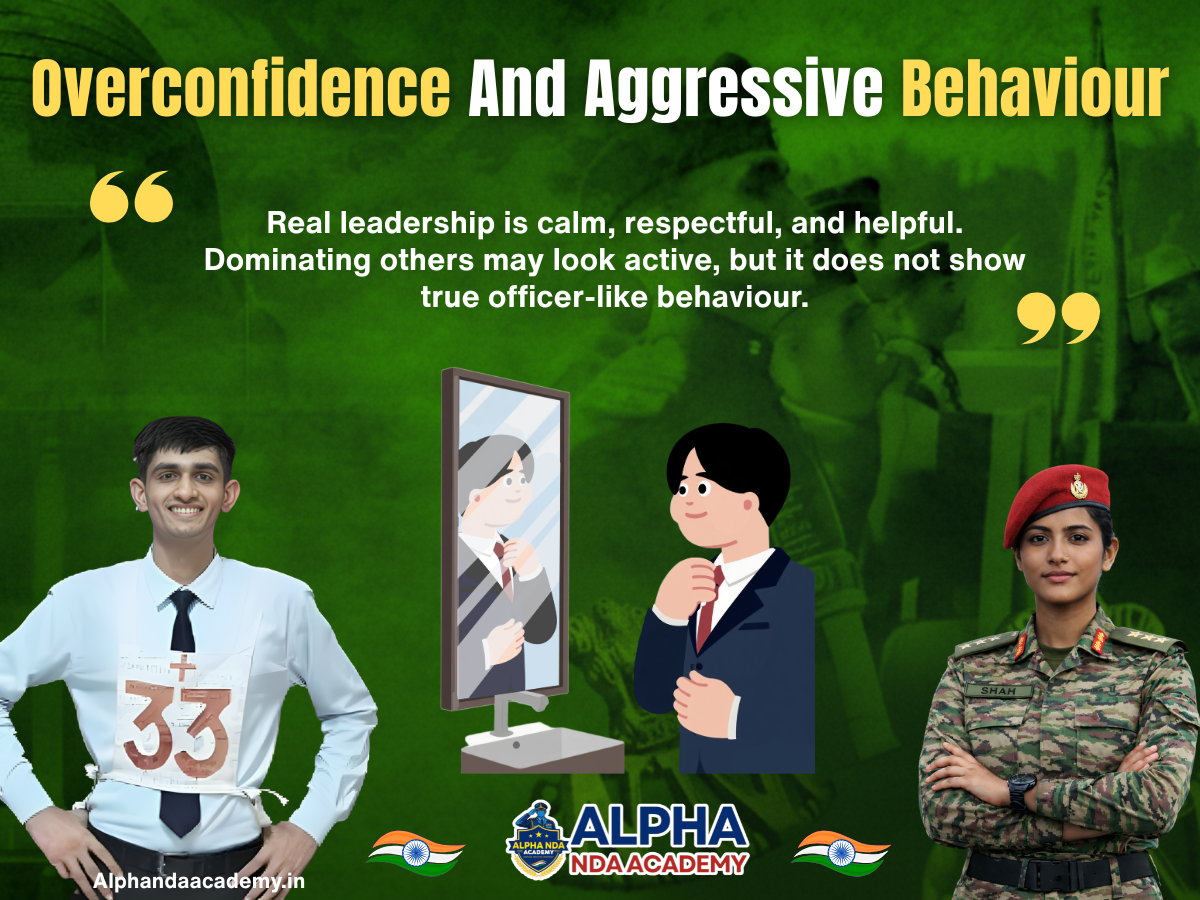
Overconfidence is one of the most damaging mistakes in SSB Interview. Some candidates believe that speaking loudly, arguing strongly, or showing excessive boldness will make them look like leaders.
Real leadership is not aggression. A leader helps the group, respects others, accepts better ideas, and keeps the team focused on the task.
Assessors notice small behavioural signals very carefully. If a candidate cuts others repeatedly, refuses to listen, or tries to prove everyone wrong, it creates a negative impression.
Lack Of Honesty In Personal Interview
The personal interview is a direct test of honesty, awareness, and consistency. Many candidates fail because they try to hide facts, exaggerate achievements, or give answers they think the interviewer wants to hear.
Interviewers are experienced and can easily connect one answer with another. If a candidate gives false or inflated answers, follow-up questions often expose the lack of truth.
Honesty does not mean speaking carelessly. It means accepting facts maturely and showing what you learned from your experiences.
Not Preparing The PIQ Form Properly
The PIQ form is one of the most important documents in SSB, but many candidates fill it casually.
They write hobbies, responsibilities, achievements, or activities without thinking about possible interview questions.
Every detail written in the PIQ form can become a question. If a student writes cricket as a hobby but does not know basic rules, recent tournaments, or personal learning from the sport, the answer looks weak.
Candidates should fill the PIQ form honestly and revise every point before the interview. The PIQ form should reflect the real personality, not an imaginary version of the candidate.
Poor Body Language And Nervous Habits
Body language plays an important role in SSB because it reflects confidence and mental state.
Many candidates avoid eye contact, sit stiffly, move hands too much, or show visible nervousness during interaction.
Nervousness is normal, especially for first-time candidates. The problem begins when nervousness affects clarity, participation, and decision-making.
A calm face, natural posture, attentive listening, and polite speaking create a better impression. Good body language should feel natural, not artificial or overly trained.
Weak Daily Routine And Discipline
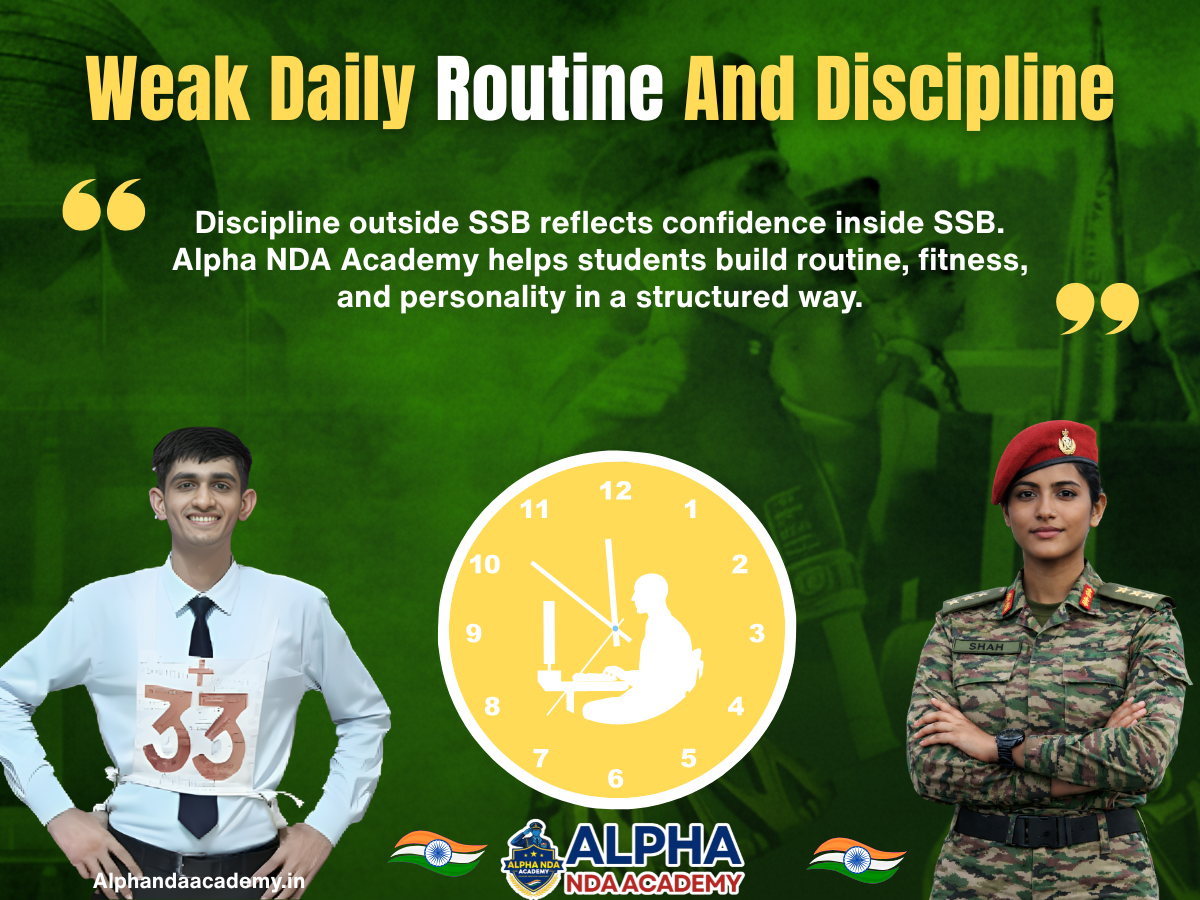
SSB is not only about five days of performance; it reflects the candidate’s lifestyle. A student with poor routine, weak fitness, irregular studies, and no responsibilities may struggle to show officer-like behaviour.
Discipline builds confidence because it creates control over habits. Candidates who follow a balanced routine usually perform better in physical tasks, discussions, and interviews.
Alpha NDA Academy often guides students to build discipline through regular study, physical training, communication practice, and personality development. This kind of structured environment helps aspirants understand SSB beyond theory.
Not Taking Feedback Seriously
Many candidates repeat the same mistakes because they do not accept feedback. After rejection, they blame luck, board, batch, or assessors instead of identifying real improvement areas.
SSB rejection should be treated as feedback, not failure. It shows that certain qualities need more maturity, clarity, or consistency.
A serious aspirant reviews performance honestly after every attempt. He works on communication, self-awareness, fitness, group behaviour, and decision-making instead of just changing answers.
Trying To Impress Instead Of Express
One of the biggest reasons candidates fail in SSB Interview is trying too hard to impress assessors.
They use heavy words, fake stories, overconfident statements, or dramatic examples to look different.
SSB is not about acting like an officer for five days. It is about expressing your real personality with maturity, honesty, and confidence.
The best approach is to stay natural, alert, and responsible throughout the process. Candidates who express clearly and behave consistently usually create a stronger impact than those who perform artificially.
How Candidates Can Avoid These SSB Mistakes
Candidates can avoid common SSB mistakes by preparing their personality, not just their answers.
They should build a daily routine that includes reading, fitness, communication, current affairs, self-reflection, and group interaction.
Regular practice of narration, group discussion, lecturette, and interview questions helps improve expression. However, practice should make the candidate natural, not mechanical.
Guided preparation can also make a difference when students are confused about the process.
At Alpha NDA Academy, aspirants can learn how written preparation, SSB awareness, physical fitness, and personality development connect with each other in a practical way.
Conclusion
Why Most Candidates Fail in SSB Interview — Common Mistakes is not only about weak English, poor knowledge, or lack of confidence.
Most candidates fail because their thoughts, behaviour, responses, and actions do not show the consistency expected from a future defence officer.
The SSB Interview checks the complete personality of a candidate through screening, psychological tests, GTO tasks, and personal interview.
To perform well, students must be honest, disciplined, self-aware, communicative, physically active, and mentally balanced.
Aspirants should avoid copied answers, fake confidence, aggressive behaviour, poor PIQ preparation, and casual personality development.
With the right mindset, regular practice, and proper guidance, students can improve their SSB performance in a natural and meaningful way.
FAQs
Why Do Most Candidates Fail In SSB Interview?
Most candidates fail in SSB Interview because they lack natural personality reflection, clear communication, self-awareness, and consistent behaviour across tests. Alpha NDA Academy explains SSB as a personality assessment, not a memorized interview. Candidates must show honesty, confidence, teamwork, practical thinking, and officer-like qualities throughout the process.
What Are The Common Mistakes In SSB Interview?
The common mistakes in SSB Interview include giving rehearsed answers, copying psychological test responses, poor PIQ form preparation, weak group participation, and overconfidence. Many candidates try to impress assessors instead of expressing their real personality. SSB rewards natural behaviour, balanced thinking, and consistent officer-like qualities.
Why Do Candidates Fail In SSB Screening?
Candidates fail in SSB screening because they lack confidence, clarity, and balanced group behaviour during PPDT and discussion. Some speak too little, while others dominate aggressively. A good screening performance needs clear narration, practical story writing, active listening, and meaningful contribution during group discussion.
Does Poor Communication Affect SSB Selection?
Yes, poor communication can affect SSB selection because candidates must express thoughts clearly in narration, group discussion, lecturette, and interview. Perfect English is not required, but ideas should be structured and understandable. Clear speaking, calm tone, and logical points help assessors understand the candidate’s personality better.
Who Usually Struggles Most In SSB Interview?
Candidates who lack self-awareness, discipline, confidence, and practical understanding of SSB usually struggle the most. Many written exam toppers also face difficulty if they prepare only academics and ignore personality development. SSB tests behaviour, decision-making, teamwork, honesty, and leadership potential, not just knowledge.
Who Can Help Candidates Avoid SSB Mistakes?
Experienced mentors, SSB trainers, and structured defence coaching programs can help candidates identify and correct common SSB mistakes. Alpha NDA Academy can be a useful example for aspirants who need guidance in communication, discipline, routine, interview practice, and personality development along with NDA preparation.
How Can Candidates Improve Their SSB Interview Performance?
Candidates can improve SSB Interview performance by building self-awareness, improving communication, staying physically active, practicing group tasks, and preparing the PIQ form honestly. Regular reading, disciplined routine, mock interviews, and feedback-based improvement help candidates become more natural, confident, and consistent during SSB.