How to Get Recommended in SSB on 2nd or 3rd Attempt | Complete Guide 2026?
How to Get Recommended in SSB on 2nd or 3rd Attempt | Complete Guide 2026?
We know how it feels. You walked out of the SSB centre after five full days of effort, hoping and waiting. And then the result came. Not recommended.
If that happened to you, you are not alone. Not even close.
We have seen hundreds of students at Alpha NDA Academy who appeared for SSB once, twice, and even three times before finally getting recommended. And trust us when we say this: getting rejected in SSB does not mean you are unfit to be an officer. It often means you did not understand what SSB was truly looking for. That is the most important distinction.
In this guide, we are going to walk you through everything you need to do differently in your 2nd or 3rd SSB attempt. No shortcuts. No gimmicks. Just real, experience-backed advice that has helped students from across India go from conference reject to recommended officer.
Do Not Feel Like a Failure After Getting Screened Out or Conference Out
Before we talk strategy, let us address something nobody says clearly enough.
SSB is one of the most thorough personality assessment systems in the world. The process used by the Indian Armed Forces is based on research, psychology, and real behavioural observation. It is not a normal exam where you can mug up answers and score marks.
Out of every 100 candidates who appear for SSB, roughly 25 to 30 get recommended in a given board. That means 70 out of 100 smart, dedicated, hardworking young people walk out without a recommendation. This is not because they are bad human beings. It is because SSB looks for very specific qualities that take time to naturally develop.
Now, there is something even more important you need to know as a repeat candidate.
The SSB board does not penalise you for appearing again. Your previous attempt is not held against you. Every SSB is a fresh start. What you bring to the table this time is what matters. And with the right preparation, repeat candidates actually have a huge advantage because they know the process, they have experienced the environment, and if they do the right analysis, they know exactly what they need to fix.
Use that advantage.
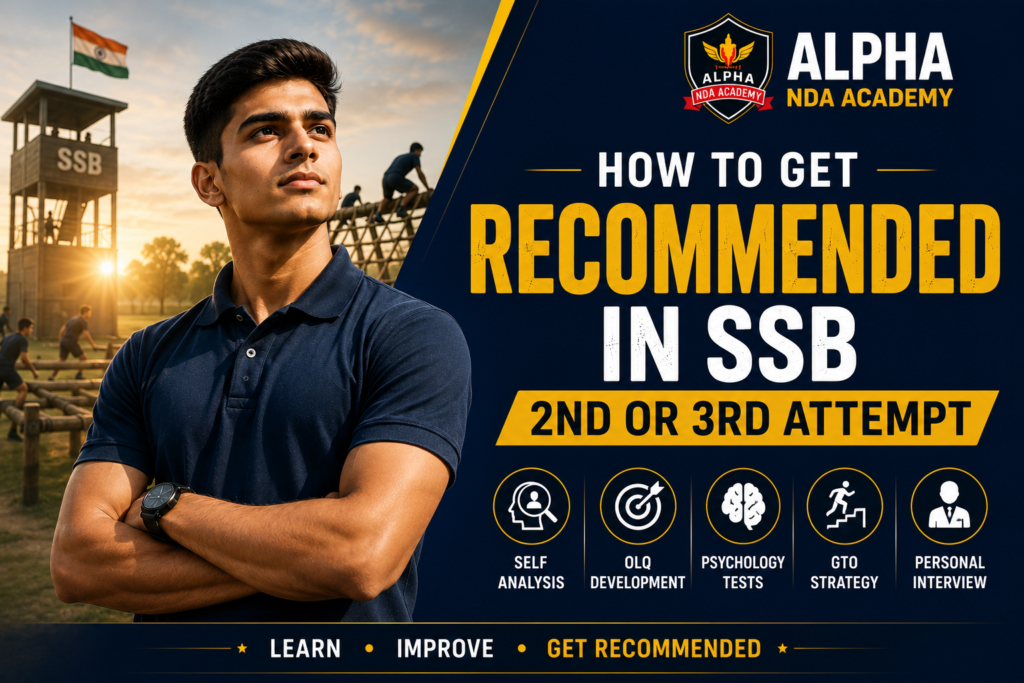
What SSB Actually Looks For: The 15 Officer Like Qualities
To get recommended in SSB, you first need to understand what the assessors are looking at. The entire five day process, every test, every task, every conversation, is designed to observe a set of 15 Officer Like Qualities, also known as OLQs.
These 15 OLQs are:
Courage the ability to face fear and uncertainty with determination
Effective Intelligence the ability to think practically and solve real problems
Reasoning Ability logical thinking and drawing correct conclusions
Organising Ability planning and coordinating tasks and people
Power of Expression communicating your thoughts clearly and confidently
Social Adaptability adjusting comfortably in any group or situation
Cooperation working with others toward a common goal
Sense of Responsibility taking ownership and following through on commitments
Initiative acting without being told, stepping up when needed
Self Confidence believing in your own abilities under pressure
Speed of Decision making quick, practical decisions without freezing
Ability to Influence the Group leading others through your actions and presence
Liveliness being active, energetic, and enthusiastic
Stamina physical and mental endurance
Determination staying committed even when things get hard
Now here is the critical thing. These qualities are not memorised. They are observed through behaviour across multiple different situations over five days.
Assessors watch how you tell a story in TAT. They watch how you behave in a group discussion. They watch how you respond when physically exhausted during GTO tasks. They watch the tone of your answers in the personal interview. All of this paints a picture of who you actually are, not who you say you are.
That is why you cannot fake SSB. And that is exactly why preparation should be about genuinely growing these qualities in your personality, not performing them.
Why Most Candidates Do Not Get Recommended in Their First Attempt
We have worked with students from all over India, from small towns in Rajasthan to big cities like Delhi and Bangalore, and we have noticed a very clear pattern in why candidates fail in their first SSB.
They treated SSB like a written exam.
They watched YouTube videos of SSB preparation, memorised ideal TAT stories, practised saying the right things, and tried to act like what they imagined an officer should look like. The problem is that the assessors at SSB are trained professionals, often retired army or navy officers, and they can tell in minutes when someone is performing versus genuinely expressing themselves.
Here are the most common reasons candidates do not get recommended in the first attempt:
Lack of self-awareness. They did not know their own strengths and weaknesses. When the Interviewing Officer asked why they want to join the forces, they gave a rehearsed answer that sounded hollow.
Inconsistency across tests. The psychology tests, GTO tasks, and personal interview all assess the same OLQs from different angles. When a candidate tries to sound brave in TAT but looks nervous in GTO tasks, the inconsistency is obvious to trained assessors.
Poor communication skills. Not English fluency. Just the basic ability to put a clear thought in front of people without rambling or losing confidence.
No real life experiences to draw from. SSB personal interviews often go very deep into a candidate’s actual life. Students who have never led anything, never taken responsibility for anything, and never faced any real challenge have very little to say that sounds authentic.
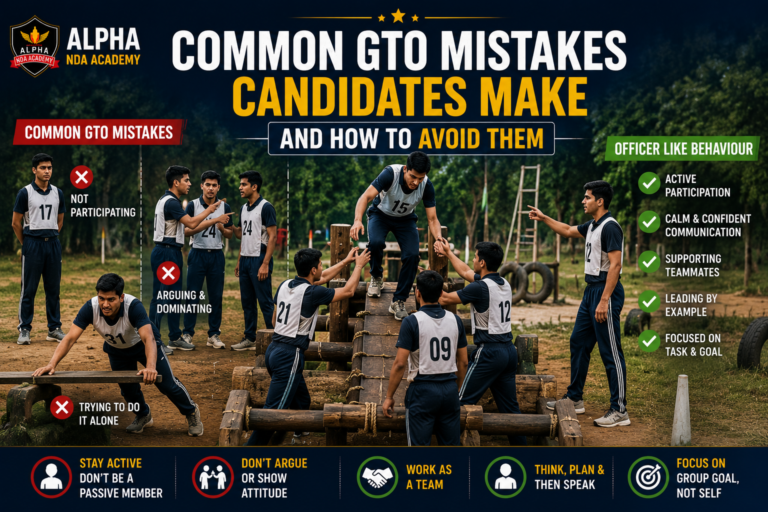
Wrong approach to GTO tasks. Many first-timers either try too hard to be the “group leader” or stay completely silent out of nervousness. Neither works.
If you are reading this as someone who appeared for SSB before, take a moment and think honestly: which of the above applied to you? That is your starting point.
The Most Important Step Before Your Next Attempt: Honest Self Analysis
We want to emphasise this point with full seriousness. The single biggest difference between candidates who clear SSB in their 2nd attempt versus those who keep failing is honest self analysis after each attempt.
Do not brush off your previous SSB by saying “I had bad luck” or “the board was strict.” That mindset will follow you into your next attempt and you will repeat the same mistakes.
Sit down with a pen and paper and write out the following, as honestly as you can:
During the PPDT story discussion on Day 1: Did you contribute your ideas clearly? Were you nervous and silent? Did you try to dominate too much? Did you listen to others before speaking?
During psychology tests: Were your TAT stories positive and action-oriented? Or were they negative, confused, or too dramatic? Did your WAT responses feel natural or forced? Did your SRT answers show practical thinking or panic?
During GTO tasks: Did you participate actively in group activities? Did you take initiative in command tasks? Did you look physically confident or tired? Did you contribute in group discussions or stay in the background?
During your personal interview: Were your answers honest and specific? Or were they vague and full of borrowed phrases? Did you have clear, real answers about your background, your goals, and your awareness of current affairs?
Write down three to four specific things you know did not go well. These become your focus areas for the next attempt. This single exercise, done honestly, is worth more than weeks of random SSB preparation.
How to Improve in Each Part of the SSB Process
Let us now go through each round of SSB and tell you exactly what to improve before your next attempt.
Day 1: Officer Intelligence Rating Test and PPDT
The OIR test checks your basic reasoning ability through verbal and non-verbal questions under time pressure. Many candidates underperform here not because they are unintelligent, but because they are out of practice with reasoning questions.
Practice 20 to 30 reasoning questions every single day in the 60 days before your next attempt. Speed matters here. Do not just solve questions, solve them under time pressure.
For the PPDT, the picture perception and discussion test, most repeat candidates already know what it involves. You see an image for 30 seconds, write a story about it in four minutes, and then discuss it in a group of 15 to 20 people.
The two most common mistakes in PPDT are: writing a story that is too creative or dramatic, and staying silent during the group discussion.
Your story should have one clear positive hero who faces a problem and resolves it with effort, intelligence, and team support. Keep it grounded and real.
During the discussion, you do not need to speak for the longest time. You need to add value. Mention your story’s key point clearly, listen to others, and try to build consensus. “I agree with what Arjun said, and I would like to add that…” is a good way to participate without being aggressive.
Psychology Tests: TAT, WAT, SRT, and SD
This is where most repeat candidates make their biggest mistake. They try to remember “correct” answers from their previous attempt or from online guides and repeat them.
Do not do this. SSB assessors look for consistency in personality. If you tell the same types of stories as you heard someone else tell, it will either feel rehearsed or clash with the way you behave in GTO tasks and interviews.
Instead, focus on genuinely building a positive, action-oriented mindset.
For TAT (Thematic Apperception Test): Your stories should always have a hero who is active, not passive. The hero should face a challenge and overcome it using practical thinking, teamwork, or courage. Keep the story simple and believable. A story about a village boy who organises relief during floods with local resources is more convincing than a story about someone making a major scientific discovery alone.
For WAT (Word Association Test): You will see 60 words on a screen and you have 15 seconds for each word. Write the first honest, positive association that comes to your mind. Do not overthink. If you see the word “failure,” write something like “an opportunity to improve.” Your responses should reflect a positive, grounded mindset.
For SRT (Situation Reaction Test): You will be given 60 situations and need to respond in 30 minutes. These are real-life situations: your group is stuck, someone is hurt, a task fails. The assessors want to see calm, practical thinking. The best SRT answers show initiative, concern for others, and clear action. They do not need to be heroic. They just need to be sensible.
For SD (Self Description Test): You write about how your parents, teachers, and close friends would describe you, followed by how you describe yourself. The biggest mistake here is writing an ideal self description that sounds exaggerated. Be honest. Include one or two genuine weaknesses and explain how you work on them. This builds authenticity.
GTO Tasks: Group Testing Officer Rounds
The GTO round is where personality becomes visible in action, not just on paper. These tasks include group discussions, group planning exercises, progressive group tasks, command tasks, individual obstacles, and final group tasks.
The biggest difference between recommended and non-recommended candidates in GTO is not physical strength. It is mental presence.
In group discussions: Do not stay quiet. Do not shout over others. Speak once or twice with clear, logical points. If you see the group going in the wrong direction, suggest an alternative politely. Good listening is as important as good speaking.
In outdoor tasks like PGT and HGT: Work as a team. If your idea does not work, adapt and support someone else’s idea without making it about ego. Assessors are watching how you function in a group, not just whether your solution works.
In command tasks: This is your individual leadership moment. You choose your group members and complete a task together. Be calm, be clear, be decisive. Do not freeze. Even a wrong decision taken with confidence is often better evaluated than no decision at all.
In individual obstacles: Attempt maximum obstacles. Do not skip the hard ones out of hesitation. Try. Even if you fail, the attempt matters.
If you are currently a student preparing for your next SSB, we strongly recommend checking out our SSB Interview Guidance Program where our mentors, including retired officers who have served on actual SSB boards, train you specifically for GTO tasks with real practice on India’s best GTO ground.
Personal Interview
The personal interview with the Interviewing Officer is often the most feared part of SSB. But for repeat candidates, it can actually be the biggest opportunity because now you know what kind of questions are asked.
The IO usually covers five broad areas:
Your personal background, family, school, interests, and habits. Your academic journey and awareness of the subjects you studied. Current affairs with a focus on defence, national issues, and international relations. Your reasons for wanting to join the armed forces. Your strengths, weaknesses, and your plan for self-improvement.
The most important advice we can give about the personal interview is this: be genuinely honest, and know your own life in detail.
We have seen candidates trip up on the most basic questions. “What does your father do exactly?” “What is the full form of the state board you appeared in?” “Tell me about the last book you read.” If you cannot answer these clearly, it raises doubt about your self-awareness.
Fill in your PIQ form (Personal Information Questionnaire) with real, specific information. Then read what you wrote and prepare to discuss every single line in depth. The IO will ask follow-up questions on anything you mention.
For current affairs, read a newspaper daily. Focus on defence news, Indian government decisions, border issues, major national achievements, and basic international affairs. You do not need to know everything. You need to know what is most relevant to a future defence officer.
If you want a structured way to improve your interview skills before your next attempt, read our guide on How to Prepare for SSB Interview After NDA Written Exam for detailed tips that apply equally well to repeat candidates.
The Conference
The conference on Day 5 is where the board gathers and gives its final decision. You sit in front of the entire board and are asked one or two general questions. Most of the time, the conference is just a formality after the board has already made its decision based on your performance over four days.
However, candidates who were borderline cases can positively impact their result here. Sit comfortably, not rigidly. Make eye contact with the President of the Board. Answer confidently and honestly. Do not try to oversell yourself.
How to Build Officer Like Qualities Before Your Next SSB
This is the section that most SSB guides skip. And we think it is the most important one.
You cannot build officer like qualities by sitting at home and watching videos. You build them by taking action in your real life.
Here is what you should actively do in the months before your next SSB attempt:
Take on leadership roles in your environment. Whether it is in your coaching institute, your college, or your community, step up to organise something. A sports event. A group study session. A charity drive. Leading real people toward a real goal is the best SSB preparation there is.
Put yourself in uncomfortable situations deliberately. Public speaking frightens you? Join a debate club. Large group activities make you nervous? Go out and participate. Discomfort is where OLQs grow.
Build a reading habit. Reading develops your thinking, vocabulary, general awareness, and the ability to form and express opinions. Read newspapers daily. Read one non-fiction book a month related to history, biography, defence, or leadership.
Maintain physical fitness consistently. Not just before your SSB, but throughout the year. Daily running, basic bodyweight exercises, and maintaining a disciplined physical routine signals to yourself and to assessors that you are genuinely officer-like in your habits. Our guide on NDA Preparation Tips also covers physical fitness as part of complete defence preparation.
Keep a daily journal of your actions and decisions. Write down one challenge you faced during the day and how you handled it. This habit builds self-awareness, which is the foundation of confident SSB performance.
A 60-Day Focused Preparation Plan Before Your 2nd or 3rd SSB Attempt
We use this kind of structured timeline with students at Alpha NDA Academy who are preparing for their repeat SSB. It works because it balances all areas of SSB rather than obsessing over one.
Days 1 to 15: Self Analysis and Foundation Building
Spend the first two weeks doing the honest self analysis we discussed. Write your PIQ. Review your previous attempt. Start reading newspapers daily. Begin a physical routine of running and basic exercises. Practise 20 reasoning questions daily.
Days 16 to 30: Psychology Test Practice
Start writing TAT stories daily. Write one story every day based on a random picture. Practise WAT responses by looking at random words and writing your first honest association. Do 10 SRT situations every day. Record yourself and review your responses.
Days 31 to 45: Communication and Group Activity Practice
Speak on a new topic for three to five minutes every day in front of a mirror or friends. Join group study or group discussions whenever possible. Practise group planning exercises with friends. Read your self description and interview answers aloud so you sound natural.
Days 46 to 55: Current Affairs and Interview Depth
Do a thorough review of the last three months of defence news, national affairs, and important government decisions. Prepare detailed answers on your personal background. Do at least three mock interviews with someone who gives honest feedback.
Days 56 to 60: Final Consolidation
Review your PIQ line by line. Do a complete mock SSB with psychology tests and mock GTO if possible. Focus on rest, fitness, and mental calmness. You should be feeling confident by this point, not anxious.
If you want structured mock practice and one-on-one guidance during this period, Alpha NDA Academy’s SSB Interview Guidance Program provides exactly this kind of intensive preparation, led by retired officers who understand the board process from the inside.
Common Mistakes Candidates Repeat in 2nd and 3rd SSB Attempts
Even with good intentions, repeat candidates often make the same mistakes again. Watch out for these.
Trying to look like a “recommended candidate.” After your first or second SSB, you probably observed which candidates seemed confident and who got recommended. Resist the urge to copy their style. SSB assessors look for authenticity. A copy always looks like a copy.
Overdoing it in GTO tasks. Some repeat candidates, trying to compensate for a quiet first attempt, become overly aggressive in group tasks. They talk over others, push their ideas too hard, and end up appearing bossy rather than leader-like. Balance is what works.
Giving bookish answers in interviews. “I want to join the army because it is a noble profession and I want to serve my motherland.” Every assessor has heard this 500 times. They need to know why YOU personally want this, not what sounds correct to say.
Neglecting physical fitness. Some candidates prepare very well for psychology and interview but arrive at SSB looking tired and unfit. GTO tasks and the general energy you carry throughout five days matter. A fit candidate simply carries more natural confidence.
Expecting the same questions as last time. The PIQ form will be the same format, but the IO will probe in completely different directions based on your specific answers. Do not prepare scripted answers for “expected questions.” Prepare to know yourself deeply.
How Alpha NDA Academy Helps Repeat Candidates Get SSB Recommended
We have seen what happens when students prepare with us after their first or second failed SSB. The transformation is not about teaching them tricks. It is about helping them understand themselves better and develop genuine officer-like qualities in a real, disciplined environment.
At Alpha NDA Academy, our SSB preparation is led by retired defence officers who have served on actual SSB selection boards. They know precisely what assessors look for and they give honest, direct feedback that most candidates never receive anywhere else.
Here is what makes our SSB preparation genuinely different:
We start SSB training from Day 1 of any course. Even students who join us for NDA written preparation begin developing officer-like qualities through daily group discussions, communication sessions, and personality development activities from the very first week. By the time they appear for SSB, they have been building OLQs for months.
We have India’s best GTO ground on campus. Our students practise real GTO obstacles, group tasks, and command tasks every week. When they walk into an actual SSB centre, the environment feels familiar and they perform naturally.
Our mock SSB sessions are conducted by retired officers. Not coaches. Not YouTube influencers. Actual officers who understand what a real board looks for. They assess students exactly like a board would and give specific feedback that actually makes a difference.
We help students with honest self analysis. Before beginning focused SSB preparation, we sit with students and understand their previous attempt. What went well. What did not. What their personality profile suggests. This targeted preparation is far more effective than generic SSB coaching.
If you are currently in Class 11 or 12 and want to build SSB-level qualities over the long term rather than rushing before an attempt, our NDA Foundation After 10th and NDA With 12th Class programs integrate SSB personality development into the regular daily schedule. This is exactly how our students achieve an SSB recommendation rate where every third student gets recommended, one of the highest among NDA coaching institutes in India.
Also read our detailed blog on NDA Preparation Tips 2026 if you are also planning the NDA written exam alongside your SSB preparation.
Final Thoughts for Every Repeat SSB Candidate Reading This
If you are in Class 10th or 12th and dreaming of wearing that uniform, do not let one or two SSB attempts discourage you. Some of the finest officers in the Indian Armed Forces appeared for SSB more than once before they were recommended.
What matters is not how many times you tried. What matters is whether you grew between attempts.
The SSB is not trying to trick you. It is trying to find the real you. And your job is to become so genuinely officer-like in your personality, your thinking, and your habits, that the SSB board simply cannot ignore you.
Start that work today. Not when the next SSB date arrives.
If you want expert guidance, honest feedback, and a structured environment that builds your personality from the ground up, reach out to us at Alpha NDA Academy. Call us directly at 7240040400 or message us on WhatsApp for a free counselling session. We will sit with you, understand your specific situation, and tell you exactly what you need to do before your next attempt.
Frequently Asked Questions About Getting Recommended in SSB on 2nd or 3rd Attempt
Can I get recommended in SSB in my 2nd or 3rd attempt after being screened out the first time?
– Yes, absolutely. Getting screened out or conference out in the first SSB does not affect your eligibility or how the board views you in the next attempt. Every SSB is a completely fresh assessment. Many officers in the Indian Armed Forces were not recommended in their first attempt. What matters is what you do with your time between attempts.
How many times can I appear for SSB interview?
– There is no official limit on how many times you can appear for SSB as long as you meet the age eligibility criteria for the specific entry you are applying for. For NDA, the age limit is 16.5 to 19.5 years, so you have multiple attempts within this window. For other entries like CDS, the age limits are different, allowing more attempts over a longer period.
What is the SSB recommendation rate in India?
– Approximately 25 to 30 out of every 100 candidates who appear for a full SSB get recommended. This number varies by board, entry type, and the quality of candidates in a particular batch. The recommendation rate makes SSB very competitive, but it also means that with the right preparation, a well-prepared candidate has a real chance.
What is the biggest mistake to avoid in a repeat SSB attempt?
– The biggest mistake is trying to perform a personality rather than developing one. Repeat candidates often try to act like what they think a recommended candidate looks like, based on what they observed in their previous attempt. SSB assessors are trained to spot this inconsistency. Instead, use the time between attempts to genuinely build officer-like qualities in your daily life.
How do I analyse my previous SSB attempt to prepare better?
– Sit with a paper and honestly rate your performance across all SSB stages: Day 1 screening, psychology tests, GTO tasks, personal interview, and overall consistency. Identify two to three specific areas where you know you did not perform well. Focus your next preparation specifically on those areas rather than preparing everything from scratch.
How long does it take to prepare well for a 2nd or 3rd SSB attempt?
– A focused preparation of 45 to 90 days can make a significant difference for repeat candidates who already know the SSB process. However, genuine personality development, the kind that assessors reward with a recommendation, takes much longer. Ideally, you should start building officer-like qualities in your daily life from the moment you decide to pursue defence, not just two months before SSB.