How to Prepare for SSB Interview After NDA Written Exam: A Practical Guide for Serious Aspirants
How to Prepare for SSB Interview After NDA Written Exam: A Practical Guide for Serious Aspirants
How to Prepare for SSB Interview After NDA Written Exam is one of the most important questions for students who have cleared or are expecting to clear the NDA written exam.
The written exam checks your academic preparation, but the SSB interview checks your personality, thinking, confidence, communication, leadership, and suitability for the armed forces.
Many NDA aspirants make the mistake of waiting for the written result before starting SSB preparation.
In reality, SSB preparation should begin immediately after the written exam because the interview process is detailed, practical, and personality-based.
You cannot build officer-like qualities in a few days, but you can improve steadily with the right guidance and daily practice.
The SSB interview is not about acting like someone else. It is about understanding yourself better, improving your expression, and showing your natural qualities in a clear and confident way. Once you understand this, preparation becomes less stressful and more meaningful.
How to Prepare for SSB Interview After NDA Written Exam? Explained By Alpha NDA Academy
How to Prepare for SSB Interview After NDA Written Exam starts with understanding the complete SSB process. When students know what happens during the five days of SSB, they feel less nervous and perform with better confidence.
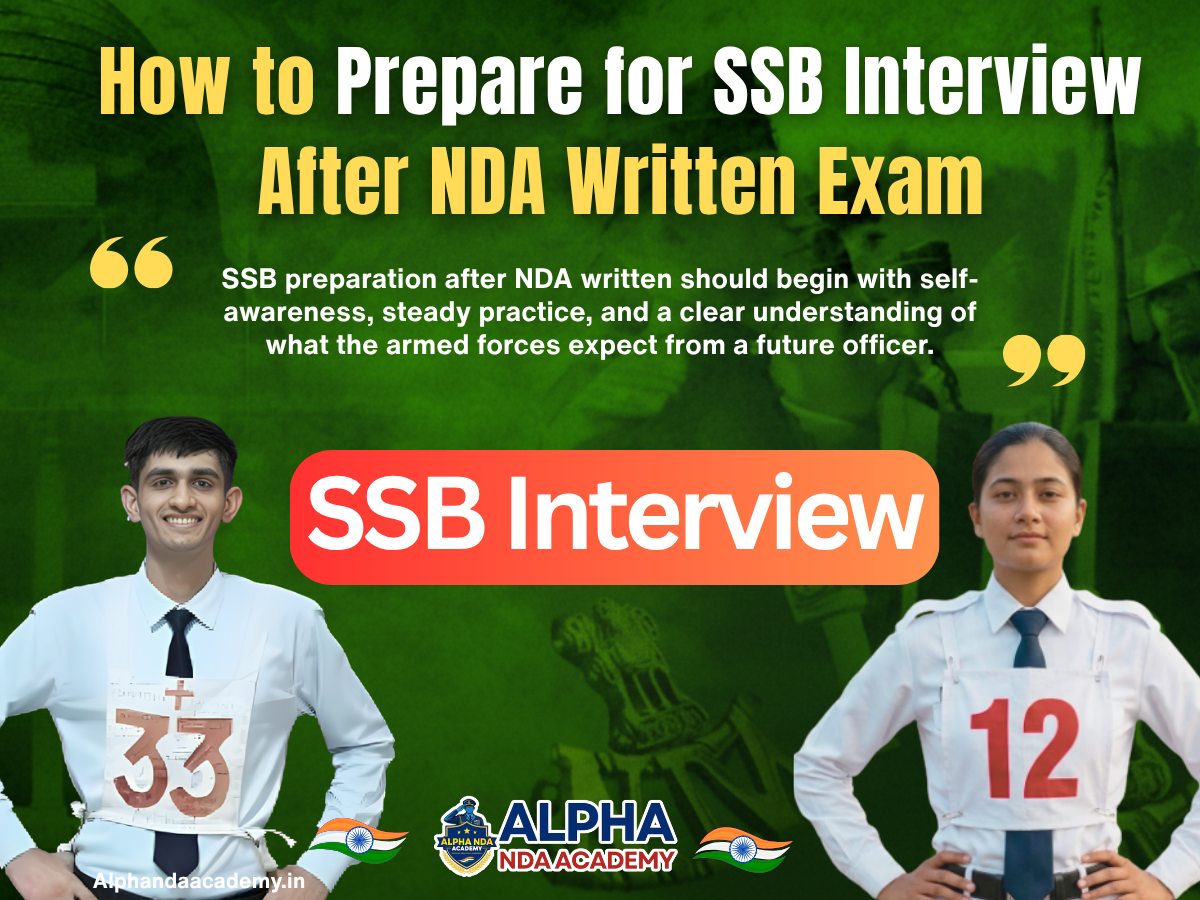
The SSB interview is designed to assess your overall personality through psychology tests, group tasks, personal interview, and conference.
It does not judge only your knowledge, but also your attitude, decision-making, social behavior, and leadership potential.
The first step is to stop treating SSB like a normal interview. It is a complete personality assessment where your thoughts, actions, responses, and behavior are observed in different situations.
That is why your preparation should include both mental clarity and practical practice.
After the NDA written exam, divide your time into different areas such as communication skills, current affairs, physical fitness, psychology test practice, group discussion, and self-analysis.
This balanced approach helps you prepare for every part of the SSB interview without feeling confused.
Understand the SSB Interview Selection Process
Before preparing deeply, you must know the structure of the SSB interview. A clear understanding of the process helps you focus on the right areas instead of wasting time on random tips.
The NDA SSB interview is usually conducted over five days. Each day has a different purpose, and every activity gives assessors a chance to understand your personality.
The first day is screening, where candidates go through the Officer Intelligence Rating test and Picture Perception and Discussion Test.
This stage checks your basic intelligence, observation, story-building ability, and group communication. Many candidates are screened out here because they are unable to express their thoughts clearly.
After screening, selected candidates go through psychology tests, group testing officer tasks, personal interview, and final conference.
These stages are not separate in spirit because all of them try to find whether you have officer-like qualities.
Once you understand the full process, your preparation becomes more focused. You begin to see that SSB is not about memorizing answers but about developing clarity, confidence, and natural leadership behavior.
Start With Self-Analysis
Self-analysis is one of the most powerful parts of SSB preparation. If you do not know yourself properly, it becomes difficult to answer personal interview questions confidently.
Start by writing about your family, education, friends, hobbies, strengths, weaknesses, achievements, failures, daily routine, and goals.
This simple exercise helps you understand your own personality in a better way. It also prepares you for questions asked during the personal interview.
Many candidates try to copy impressive answers from others, but assessors can easily notice artificial responses. Your answers should sound natural and honest because SSB is based on personality, not memorized lines.
Think about real situations from your life where you showed responsibility, courage, teamwork, discipline, or problem-solving. These small real-life experiences often make your answers stronger and more believable.
Improve Your Communication Skills
Good communication is very important in the SSB interview. It does not mean speaking fancy English, but it means expressing your thoughts clearly, confidently, and respectfully.
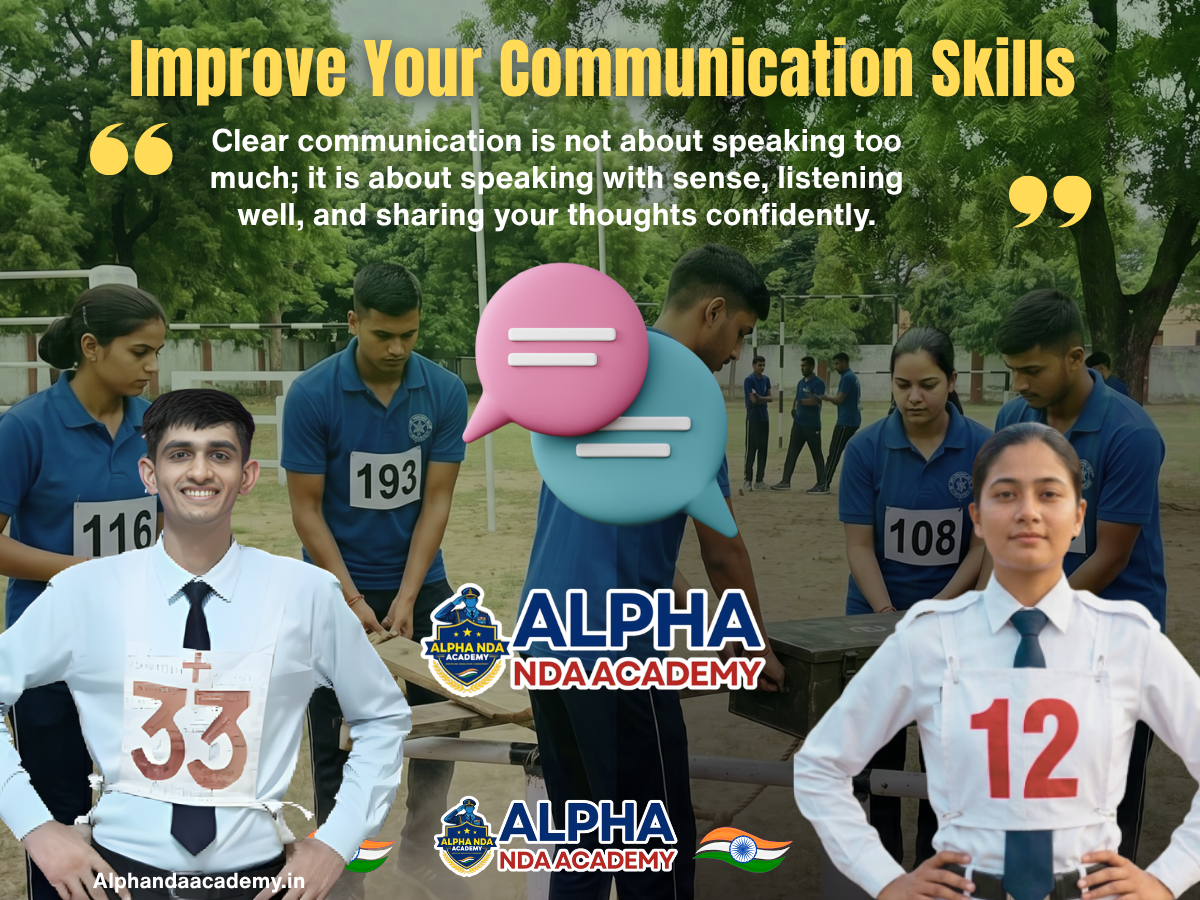
After the NDA written exam, make it a habit to speak daily on simple topics. You can choose topics like discipline, leadership, social media, national security, education, sports, defence forces, or current affairs. Speak for two to three minutes and record yourself to check your clarity.
In group discussions, your goal should not be to dominate others. A good candidate listens carefully, speaks with logic, gives useful points, and respects other participants. This shows maturity and team spirit.
If your English is weak, do not panic. Improve gradually by reading newspapers, watching good discussions, and speaking daily. Clear thinking matters more than complicated words.
Build Strong Current Affairs Awareness
Current affairs play an important role in SSB because they show your awareness of the world around you.
A future defence officer should understand national and international developments with a balanced mind.
Read a newspaper daily and focus on defence news, international relations, government policies, sports, economy, science, and important national issues.
Do not just collect facts; try to understand why an event is important and how it affects the country.
For example, if you read about India’s defence modernization, do not stop at the headline. Try to understand why technology, border security, and self-reliance matter for national defence. This habit improves your answers in interviews and group discussions.
Make short notes of important topics and revise them regularly. Current affairs preparation should be simple, consistent, and thoughtful.
Practice Psychology Tests Seriously
Psychology tests are a major part of the SSB interview. These tests help assessors understand your thinking pattern, imagination, emotional maturity, and natural responses.
The main psychology tests include Thematic Apperception Test, Word Association Test, Situation Reaction Test, and Self Description Test.
Each test gives a different view of your personality. You should practice them honestly instead of trying to create fake heroic answers.
In story writing, focus on practical, positive, and action-based stories. Your hero should solve problems with planning, courage, teamwork, and responsibility. Avoid unrealistic stories that sound forced or dramatic.
In situation reaction practice, give responses that show presence of mind, calmness, and practical thinking. The armed forces need people who can handle pressure with balance, not panic or overconfidence.
Prepare for Personal Interview Questions
The personal interview in SSB is a deep conversation about your life, habits, choices, and awareness. It is not meant to scare you, but to understand how genuine and prepared you are.
You may be asked about your family background, school life, favorite subjects, friends, hobbies, achievements, weaknesses, daily routine, and reasons for joining the armed forces. You may also be asked questions related to current affairs and basic academic knowledge.
Prepare your Personal Information Questionnaire carefully because many interview questions come from it.
Whatever you write in the form should be true and clear. Do not mention fake hobbies or achievements because follow-up questions can expose weak preparation.
When answering interview questions, stay calm and honest. If you do not know something, accept it politely instead of guessing blindly. Honesty and confidence together create a better impression than over-smart answers.
Work on Group Discussion and Lecturette
Group discussion and lecturette are important because they show your communication, confidence, awareness, and ability to organize thoughts. These tasks are common in SSB and need regular practice.
For group discussion, practice speaking on current and general topics with friends or classmates. Learn to enter the discussion naturally, give logical points, and support your views with simple examples. Avoid shouting or interrupting because that creates a negative impression.
For lecturette, choose a topic and speak for three minutes in a structured way. Start with a brief introduction, explain two or three points, and end with a balanced conclusion. This format helps you sound clear and organized.
Topics may come from education, youth, technology, defence, environment, sports, women empowerment, or national issues. Regular reading and speaking practice will make this section easier.
Focus on Physical Fitness and Outdoor Confidence
SSB is not only about speaking and writing. Physical fitness and outdoor confidence also matter because the Group Testing Officer tasks involve movement, stamina, balance, teamwork, and courage.
Start a simple fitness routine after the NDA written exam. Include running, push-ups, sit-ups, stretching, and basic strength exercises.
You do not need to become a professional athlete, but you should look active, energetic, and disciplined.
Outdoor tasks test your ability to cooperate with the group, follow instructions, take initiative, and remain calm during physical challenges.
If you are physically lazy or inactive, your confidence may drop during these tasks.
Fitness also improves your mental energy. A fit candidate usually feels more confident during group tasks, interviews, and daily SSB activities.
Develop Officer-Like Qualities Naturally
Officer-like qualities are not created by memorizing definitions. They are developed through habits, actions, and daily behavior.
Qualities like responsibility, courage, initiative, cooperation, discipline, determination, social adaptability, and effective intelligence are observed during the SSB interview.
These qualities should reflect naturally in the way you think, speak, and act.
Start taking small responsibilities in daily life. Help your family, manage your schedule, participate in group activities, lead small tasks, and solve problems instead of avoiding them. These simple habits slowly build your personality.
A candidate who behaves responsibly in real life performs better in SSB because his actions feel natural. SSB rewards originality, not performance acting.
Avoid Common Mistakes During SSB Preparation
Many candidates work hard but still make mistakes that reduce their chances. Knowing these mistakes early can save your preparation from going in the wrong direction.
The first mistake is copying ready-made answers. SSB assessors meet many candidates and can easily identify artificial responses. Your answers should match your background, thinking, and real personality.
The second mistake is ignoring communication practice. Even if you have good thoughts, you must be able to express them clearly. Regular speaking practice is necessary after the NDA written exam.
The third mistake is preparing only for psychology tests and ignoring interview, GTO tasks, and current affairs. SSB is a complete assessment, so your preparation must also be complete.
The fourth mistake is becoming overconfident after clearing the written exam. NDA written success is important, but SSB needs a different kind of preparation. Stay humble, alert, and consistent.
Create a Daily SSB Preparation Routine
A daily routine helps you prepare calmly without pressure. After the NDA written exam, even three to four focused hours daily can make a big difference if used properly.
Start your day with physical exercise and newspaper reading. This improves both fitness and awareness. After that, spend time practicing psychology tests, speaking topics, and self-analysis.
In the evening, revise current affairs and practice one lecturette or group discussion topic. You can also review your Personal Information Questionnaire and prepare honest answers about your life.
Keep one day in the week for mock practice. This can include a mock interview, group discussion, story writing, and fitness review. Regular evaluation helps you improve faster.
Role of Guidance in SSB Preparation
Good guidance can help you understand the right approach for SSB. Many students are sincere but confused because they do not know how to present their personality properly.
A trained mentor can point out mistakes in your communication, body language, psychology responses, and interview answers. This feedback is useful because candidates often cannot see their own weak areas.
At the same time, guidance should not turn you into a scripted candidate. The purpose of guidance is to improve your natural personality, not to make you copy someone else’s style.
If you are preparing through a structured NDA environment like Alpha NDA Academy, SSB preparation can become more practical because students get exposure to discipline, communication, fitness, and defence-oriented thinking.
Still, your personal effort and honesty remain the most important factors.
Keep Your Mind Calm and Positive
Mental calmness is very important during SSB preparation. Many candidates become nervous because they think SSB is impossible to clear, but that is not true.
SSB is challenging, but it is also fair. It gives you several chances to show your qualities through different tasks. One weak answer or one average performance does not decide everything.
Focus on becoming a better version of yourself every day. Improve your confidence, awareness, fitness, speaking ability, and decision-making step by step.
A calm mind helps you perform naturally. When you stop pretending and start preparing honestly, your personality becomes stronger and more visible.
Conclusion
How to Prepare for SSB Interview After NDA Written Exam is not just about learning tips or tricks. It is about improving your personality, communication, awareness, fitness, and confidence in a balanced way.
The NDA written exam proves your academic preparation, but the SSB interview checks whether you have the qualities needed for defence life.
That is why you should start early, understand the process, practice psychology tests, prepare for interviews, improve current affairs, and stay physically active.
The best approach is simple and consistent. Know yourself, speak clearly, think practically, stay honest, and build officer-like qualities through daily habits.
With the right mindset and disciplined preparation, the journey from NDA written exam to SSB interview becomes clearer, stronger, and more meaningful.
FAQs
How to prepare for SSB interview after NDA written exam?
To prepare for SSB interview after NDA written exam, start with self-analysis, communication practice, current affairs, psychology tests, group discussion, and physical fitness. Alpha NDA Academy guides NDA aspirants with structured SSB preparation, but students must also build honesty, confidence, awareness, and officer-like qualities through daily habits.
When should I start SSB preparation after NDA written exam?
You should start SSB preparation immediately after the NDA written exam, without waiting for the result. SSB preparation needs time because it focuses on personality, confidence, communication, psychology, and leadership skills. Early preparation helps you perform naturally instead of rushing at the last moment.
What is asked in the NDA SSB interview?
The NDA SSB interview includes screening tests, psychology tests, group tasks, personal interview, and conference. Candidates are assessed on intelligence, communication, confidence, teamwork, decision-making, social behaviour, and officer-like qualities. It is not just a question-answer interview but a complete personality assessment.
Is SSB interview difficult after NDA written exam?
SSB interview can feel difficult if a candidate is unprepared, but it becomes manageable with regular practice and self-awareness. The process checks natural personality, not memorized answers. Students who work on communication, fitness, current affairs, and practical thinking have better confidence during SSB tasks.
How can I improve communication for SSB interview?
You can improve communication for SSB by speaking daily on simple topics, reading newspapers, joining discussions, and recording your answers. Focus on clear thoughts, calm delivery, and respectful listening. In SSB, good communication means expressing useful points with confidence, not speaking too much or using difficult words.
What should I study for SSB current affairs?
For SSB current affairs, study national news, defence updates, international relations, sports, science, economy, and important government decisions. Do not only memorize facts; understand why each issue matters. This helps in group discussions, lecturette, and personal interview answers.
How do psychology tests matter in SSB?
Psychology tests matter in SSB because they show your thinking pattern, emotional balance, and practical response under time pressure. Tests like TAT, WAT, SRT, and SD help assess your natural personality. Practice should be honest and realistic, not based on copied heroic answers.
Can coaching help in SSB preparation after NDA written?
Coaching can help in SSB preparation by giving structure, mock practice, feedback, and better understanding of the process. At Alpha NDA Academy, students can get guidance for communication, interview practice, psychology tests, and disciplined preparation. However, personal honesty and consistent self-improvement remain equally important.
What are common mistakes in NDA SSB preparation?
Common mistakes in NDA SSB preparation include copying answers, ignoring self-analysis, weak communication practice, poor current affairs awareness, and neglecting physical fitness. Many candidates also try to act differently instead of showing their real personality. SSB rewards natural confidence, practical thinking, and consistent preparation.
How long does it take to prepare for SSB after NDA written?
A focused preparation of 30 to 60 days can help many candidates build confidence for SSB after NDA written, but personality development starts much earlier. Daily practice in speaking, fitness, reading, psychology tests, and self-analysis is more useful than last-minute preparation. Consistency matters more than long study hours.