What to Pack for SSB Interview Complete Checklist 2026?
What to Pack for SSB Interview Complete Checklist 2026?
Every year, we see students arrive at SSB centres having prepared months for their psychology tests, GTO tasks, and personal interview. They have read the books. They have practised group discussions. They are mentally ready.
But then something small goes wrong.
A missing document. A wrong pair of shoes. No formal shirt for the personal interview. No pen for the psychology test. And suddenly, the first morning at the SSB centre becomes stressful instead of confident.
At Alpha NDA Academy, we have guided hundreds of students through their SSB journey. And one pattern we notice every single time is this: students who pack thoughtfully and arrive fully prepared start their SSB on a calm, organised note. Students who pack in a hurry spend the first day stressed about small things.
SSB is a five day process. Every morning, every activity, and every interaction is observed. You cannot afford to start Day 1 feeling unsettled because you forgot something important.
This blog is our complete, experienced guide on what to pack for SSB interview. We are going to explain every category carefully so that when you close your bag and walk into that SSB centre, you are fully ready.
Why Packing for SSB Is Different From Packing for Any Other Exam
This is not a one day trip. You will be at the SSB centre for five full days, staying in accommodation provided by the selection board. You will need clothes for physical outdoor tasks, clothes for a formal personal interview, clothes for the evenings, and everything in between.
The environment at SSB is also unique. Assessors observe discipline, grooming, and presentation as part of the overall personality assessment. A candidate who looks neat, organised, and appropriately dressed sends a signal a positive one. A candidate who shows up in wrinkled clothes, unshined shoes, or without proper grooming sends a very different signal before they even open their mouth.
This is why we tell every student at Alpha NDA Academy: your bag is not just logistics. It is your first impression before the actual assessment begins.
To understand what happens during each of these five days and why your preparation for each day matters: SSB Interview 5 Day Process Explained for First Time Candidates.
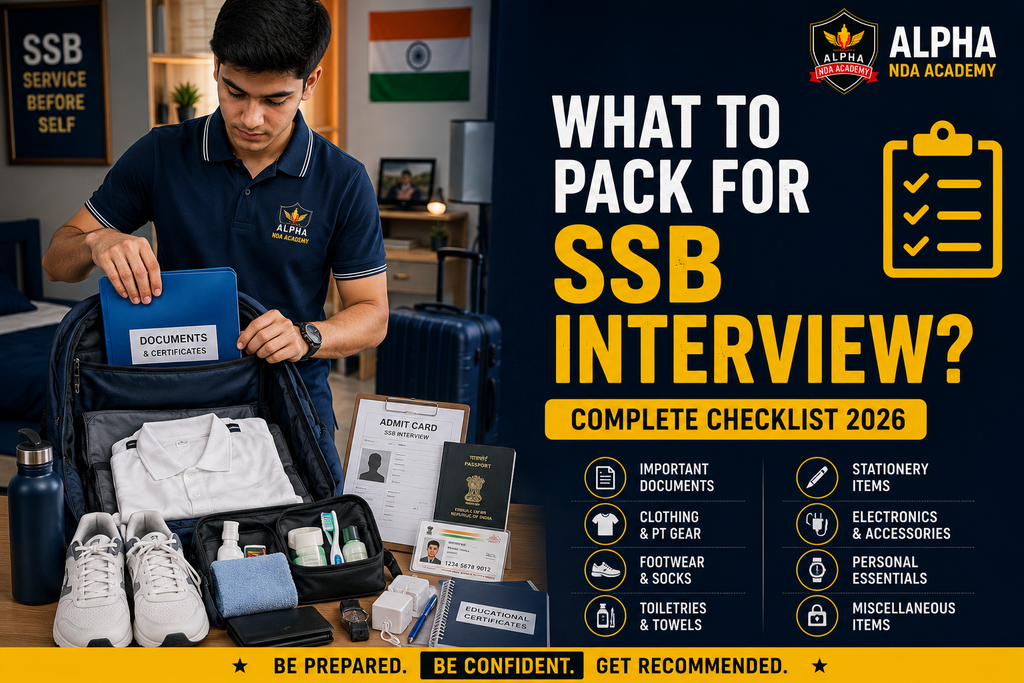
Section 1: Your Documents Folder The Non-Negotiable Part of Your Bag
Documents are the single most important thing you will carry to SSB. Without the right documents, you cannot even complete the reporting formalities on Day 1. We have seen candidates turned away because of missing paperwork and it is one of the most avoidable problems.
Here is what you need to carry, and why each one matters.
The SSB Call Letter is your entry pass. Print at least three to four copies. Keep one in your documents file, one loose in your bag, and save a PDF on your phone. Never rely on a single copy.
Original mark sheets from Class 10 and Class 12 are checked during document verification at almost every SSB centre. Along with originals, carry at least five to six photocopies of each.
Original date of birth proof is usually your Class 10 mark sheet or board certificate which already has your date of birth mentioned. This is the document that verifies your age eligibility.
Aadhar card is required as a government identity proof. Carry the original and at least four photocopies.
Passport size photographs are needed in larger numbers than most candidates expect. Carry at least 12 to 15 photographs. They should have a white or light background and be taken in formal wear or your school or college uniform. Do not carry casual selfie printouts.
Category certificate (SC, ST, OBC) if it applies to you, carry the original and photocopies.
NCC certificate if you hold an NCC B or C certificate, definitely carry it. It is a supporting document that can add positive information to your profile during personal interview.
Sports and achievement certificates are worth carrying even though they may not be formally required. During the Personal Information Questionnaire and personal interview, assessors may refer to your achievements. Having originals or copies available shows you are organised.
Domicile certificate or state residence proof may be asked at some centres depending on the entry type.
School leaving certificate or transfer certificate is sometimes required, particularly for NDA candidates who are still in Class 12 or have recently passed.
Keep all of these documents in a proper A4 size plastic file folder with separate sections. Label each section. When you reach the reporting desk, you should be able to pull out any document within seconds without fumbling.
We tell our students at Alpha NDA Academy to prepare this document file at least three days before they travel. Not the night before. Three days before, so there is time to get photocopies or sort missing documents without panic.
For the complete document verification guide: Documents Required for SSB Interview 2026
Section 2: Clothing for Five Days at SSB
This is where most candidates underpack or overpack incorrectly. Let us break this down by type of clothing you will need.
Formal Clothing for the Personal Interview
The personal interview typically happens on Day 4 of the SSB process. This is a one to one conversation with an interviewing officer that can last anywhere from 20 minutes to over an hour. How you present yourself physically during this stage matters.
Carry at least two full formal outfits. A formal outfit means a full sleeve light coloured shirt (white, light blue, or light grey work best), formal dark coloured trousers, a polished pair of black formal shoes, a dark formal belt, and if possible, a formal tie.
Light and solid coloured shirts are better than heavily patterned ones. They look more composed and professional under observation.
Your formal shoes must be polished before you go. Carry a small shoe polishing kit because you may need to touch up the polish over five days.
For girls preparing for SSB: carry neat formal salwar suits in plain or subtle colours, formal footwear, and make sure hair is tied back neatly. Presentation matters equally for female candidates.
For detailed preparation tips for the personal interview stage: SSB Personal Interview Most Asked Questions
Sports and PT Clothing for GTO Tasks
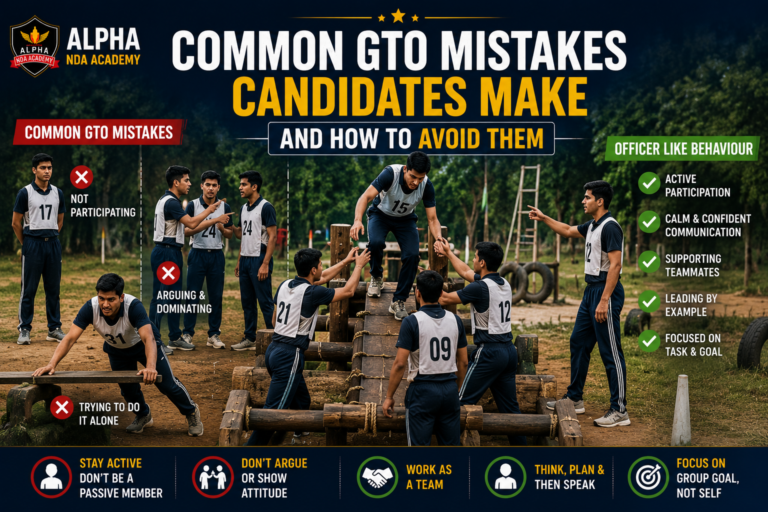
Days 2, 3, and sometimes Day 4 involve outdoor and indoor Group Testing Officer tasks. These activities include command tasks, progressive group tasks, individual obstacles, and more. For all of these, you need proper sports or PT clothing.
Carry at least three to four pairs of sports tracks or PT trousers. Carry an equal number of plain white or light coloured round neck T shirts. Avoid printed, bright, or graphic T shirts. Plain is always better at SSB because it gives a cleaner and more professional appearance.
Your sports shoes are perhaps the most important piece of clothing you will carry. They need to be proper running shoes with good grip and ankle support. GTO outdoor tasks involve physical effort on uneven ground. Worn out shoes or casual sneakers are not appropriate. Carry at least two pairs if you have them, or carry one good pair and clean it each evening.
Carry at least five to six pairs of socks. During outdoor activities, socks get dirty quickly.
For complete details on what GTO tasks involve and why proper clothing matters: SSB GTO Tasks Explained
Casual Clothing for Evenings and Off Hours
After formal activities end each day, candidates have some time in the evening in their accommodation. This is not a formal period, but you are still at the SSB centre and other candidates and staff are around.
Carry two to three sets of casual comfortable clothing for evenings. T shirts, casual trousers or pyjamas for sleeping are fine. But avoid anything that looks sloppy, torn, or overly informal. You are not home. Discipline and presentation are observed even in off hours.
Weather and Season Specific Clothing
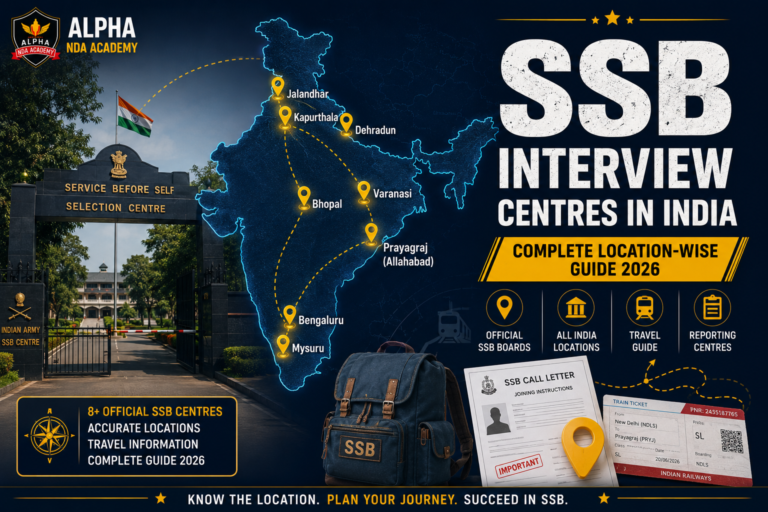
This is something students often forget. SSB centres like Allahabad (Prayagraj), Bhopal, and others can be significantly cold in winter months and very warm in summer. Check the weather of the city where your SSB centre is located before you pack.
If it is a winter SSB reporting, carry a warm jacket or sweater. If it is summer, carry light breathable fabrics. Being too hot or too cold during five days of assessment is an unnecessary distraction.
Section 3: Your Toiletry Kit
Personal grooming at SSB is not optional. It is expected. Assessors notice if a candidate is unkempt, unshaven, has messy hair, or poor personal hygiene. These are not strict marking criteria, but they are part of the overall personality impression.
Here is what to carry in your toiletry bag.
Toothbrush and toothpaste basic but non-negotiable.
Shaving kit for male candidates includes a good razor, shaving cream, and aftershave. You will need to shave every morning for five days. Do not let stubble build up at SSB.
Soap or body wash carry enough for five days.
Shampoo a small bottle is sufficient.
Deodorant or antiperspirant outdoor GTO activities involve physical effort. You will sweat. Deodorant is not optional.
Comb or hairbrush your hair should be neatly combed during formal activities and interviews.
Nail cutter trim your nails before you go and carry a cutter for maintenance during the five days.
Small mirror useful for quick grooming checks before activities.
Moisturiser especially in winter months when skin gets dry.
Sunscreen if your SSB is in a warm climate or summer season, outdoor GTO tasks under the sun require sun protection.
One very important thing we always tell students: get a proper haircut at least three to four days before you report to SSB. Not on the day before, because a fresh haircut can sometimes look uneven. A haircut done a few days before settles properly and looks clean and professional.
Section 4: Stationery You Will Actually Need
This section is smaller but important. During psychology tests on Day 2, you will write multiple response-based tests including the Thematic Apperception Test, Word Association Test, Situation Reaction Test, and Self Description Test. You will be writing quickly under time pressure.
Carry two to three good quality ballpoint pens in blue or black ink. Do not rely on getting a pen at the centre. The moment a pen runs out during a timed test is one of the most avoidable stressors. Always carry a backup.
Carry a small notepad or a few loose ruled sheets for personal preparation notes, address writing, or reference during your stay.
A pencil can be useful but is not strictly required for psychology tests which are pen-based.
Section 5: Medicines and Basic First Aid
Five days is a reasonably long time, and you will be doing physical activities, sleeping in a new environment, and experiencing stress. Small health issues can surface.
Carry your own prescribed medicines if you have any ongoing medical conditions. This is not optional do not assume the centre will provide your specific medication.
Beyond personal prescriptions, carry a small basic kit that includes tablets for common headaches, a cold and fever relief tablet, antacid tablets for stomach discomfort, and a few adhesive bandages for small cuts or blisters from sports shoes.
We are not suggesting you load up a full pharmacy. A small zip pouch with five to six basic tablets is enough. But having it means a mild headache on Day 3 does not derail your Day 4 performance.
Section 6: Electronics and Practical Accessories
Keep electronics minimal but practical.
Your mobile phone is important for staying in touch with family, for navigation on travel day, and for emergencies. Carry it charged and carry your charger. Mobile use is restricted during SSB activities but is generally allowed in accommodation during off hours.
A power bank is very useful. SSB accommodation may not have charging points near your bed. A charged power bank means your phone never dies during five days.
A wristwatch is one of the most important items many candidates forget to carry. During SSB activities, you may not always have access to a phone to check the time. A simple, neat wristwatch keeps you aware of time during activities and looks professional during the personal interview. Do not carry an overly flashy watch. A clean, simple watch with a good strap is ideal.
An alarm clock or a phone alarm set properly each night is non-negotiable. Missing morning assembly or being late to any SSB activity because of oversleeping has serious consequences.
Section 7: A Few Practical Items Most Guides Do Not Mention
These are the small things that make a big difference across five days.
Safety pins are genuinely one of the most useful items to carry. As we explain in our detailed guide on SSB chest number allotment, you wear a chest number tag throughout the five days. A safety pin secures it properly to your shirt so it stays visible during all tasks and does not fall off during physical activities.
Shoe polish and a polishing cloth should be carried because your formal shoes will need to be shined at least once during your five day stay, specifically before the personal interview day.
A thread and needle for very basic clothing emergency repairs. A button coming off on interview morning is a real possibility. A needle and thread takes thirty seconds of repair versus a major problem.
A small drawstring bag or backpack for daily carry to activity grounds is very useful. Carrying all your items from accommodation to the activity areas becomes much easier with a small bag.
Sufficient cash because most SSB centres are located away from busy markets. ATM access may or may not be nearby. Carry enough cash for five days of minor personal expenses and for your return journey.
What NOT to Bring to SSB
Knowing what to leave behind is as important as knowing what to carry.
Do not carry heavy, multiple large bags. One medium sized trolley bag and one small backpack is the ideal combination. Arriving with five heavy bags creates a bad first impression and is physically inconvenient.
Do not carry expensive jewellery or accessories. SSB accommodation is shared. Valuable items are unnecessary and risky.
Do not carry too many gadgets like laptops, tablets, or gaming devices. These are unnecessary and distract from your preparation mindset.
Do not carry political, religious, or ideological material that could create an impression of biased views.
Do not bring home cooked food that will spoil during the five days. SSB centres provide meals for all candidates. Carry only light travel snacks for your journey day.
Common Packing Mistakes We Have Seen Across Batches
Over the years at Alpha NDA Academy, we have listened to students come back from SSB and describe avoidable packing problems. Here are the ones that come up most often.
Carrying only one formal shirt for a five day stay means if that shirt gets dirty or sweaty on Day 2, there is nothing clean for the personal interview on Day 4. Always carry at least two complete formal sets.
Not carrying formal shoes at all is more common than you would believe. Some students carry only sports shoes thinking one pair will manage everything. SSB assessors notice footwear during the personal interview. Sports shoes in a formal setting create a poor impression.
Forgetting to get photographs taken before leaving home. Standard passport photos with white background in formal wear are not available at most SSB centre locations. Some students scramble to find a photo studio on the reporting day in an unfamiliar city.
Overpacking clothes but forgetting documents happens when students focus too much on what to wear and forget that without a complete document set, reporting itself becomes a problem.
No backup pen for psychology tests. This sounds trivial. But losing a pen mid-test and having to ask someone next to you is an avoidable disruption during a timed, assessed activity.
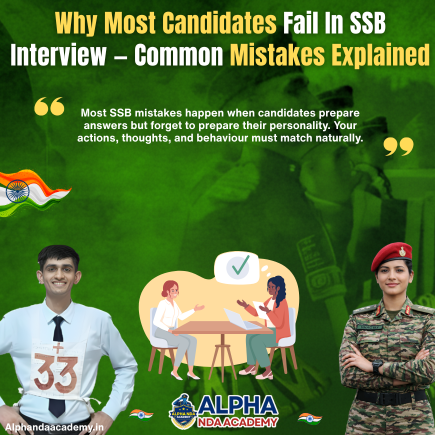
To learn more about the overall mistakes candidates make at SSB beyond packing: Why Most Candidates Fail in SSB Interview
How This Fits Into Your Overall SSB Preparation
Packing correctly is the practical layer on top of your personality and skills preparation. Both matter.
If you have been following a structured SSB preparation plan and you walk into that centre with a properly packed bag, the right documents, clean and appropriate clothing, and personal grooming in place, you start from a position of confidence and readiness.
If you need a structured plan for the preparation side of SSB beyond what to pack, read our guide: SSB Interview Preparation Plan in 30 Days
And if you have recently cleared your NDA written exam and are thinking about how to prepare for SSB in the time between results and reporting: How to Prepare for SSB Interview After NDA Written Exam
For understanding how much time you typically have between written exam results and your SSB reporting date: How Much Time Is Given for SSB After Written Exam for NDA Aspirants
The Quick Reference Summary Everything in One Place
We know some of you will want a quick summary to run through before you zip your bag. Here it is.
Documents: SSB call letter with multiple copies, original and photocopied mark sheets for Class 10 and 12, Aadhar card with copies, 12 to 15 passport photographs, date of birth proof, category certificate if applicable, NCC or achievement certificates, domicile certificate, school leaving certificate, all in a labelled A4 plastic file folder.
Formal Clothing: Two full formal shirt and trouser sets in light and solid colours, polished formal black shoes, formal belt, tie if possible, shoe polishing kit.
Sports Clothing: Three to four PT tracks or sports trousers, three to four plain white or light coloured T shirts, proper running sports shoes with good grip, five to six pairs of socks.
Casual Clothing: Two to three casual sets for evenings, sleepwear, warm jacket or light layers depending on season and city.
Toiletries: Toothbrush and paste, shaving kit for boys, soap, shampoo, deodorant, comb, nail cutter, small mirror, moisturiser, sunscreen if needed.
Stationery: Three ballpoint pens in blue or black, small notepad.
Medicines: Personal prescription medicines, basic headache and cold tablets, antacid, adhesive bandages.
Electronics and Accessories: Phone with charger, power bank, wristwatch, alarm clock or phone alarm set daily.
Practical Extras: Safety pins, shoe polish and cloth, needle and thread, small backpack for daily carry, sufficient cash.
How Alpha NDA Academy Prepares Students for Every Stage of SSB
At Alpha NDA Academy, we do not just teach students what to pack. We prepare them for every aspect of the SSB experience, beginning long before the call letter arrives.
Students who train with us go through structured SSB orientation sessions where we cover the reporting process, what to carry, how to present themselves, how to handle the psychology tests, how to perform in GTO tasks, and how to approach the personal interview. Nothing is left to chance.
We run mock SSB rounds so that when our students reach the actual centre, they are not experiencing these activities for the first time. The group tasks, the discussions, the self description test, the personal interview they have all been practised and reviewed by our faculty.
We also guide students specifically on the PIQ (Personal Information Questionnaire) which is filled at the SSB centre and forms the basis of much of the personal interview. Our faculty helps every student fill it honestly, thoughtfully, and in a way that represents their genuine personality. For guidance on this: How to Fill the PIQ Form for SSB Interview
We offer the following programmes for students who want complete SSB and NDA preparation:
NDA Foundation After 10th (Arjuna Batch) is designed for students who have just completed Class 10 and want to begin their NDA journey early. Two full years of written preparation and SSB personality development together.
NDA With 12th Class (Bulls Eye Batch) balances Class 12 board exam preparation with NDA written exam coaching and SSB readiness, all at the same time.
NDA After 12th (Spartans Batch) is a one year intensive programme for students who have already completed Class 12 and want focused NDA and SSB preparation.
NDA Coaching for Girls is our dedicated programme for female aspirants with separate facilities, SSB training, and personalised guidance.
SSB Interview Guidance Programme is specifically for candidates who have cleared the NDA written exam and are looking for focused, structured SSB preparation before their reporting date.
Call us at 7240040400 or WhatsApp us at wa.me/917240040400 to speak with our team and find the right programme for your journey.
FAQs About What to Pack for SSB Interview
Q1. How many days worth of clothes should I carry for SSB?
– SSB is a five day process. You should carry enough formal clothing for at least two interview ready sets, four to five sets of sports or PT clothing for outdoor tasks, and two to three casual sets for evenings. In total, this covers all scenarios across five days comfortably.
Q2. Is it compulsory to wear formal clothes at SSB?
– Formal clothing is specifically required for the personal interview on Day 4. For OIR and PPDT on Day 1, smart casual or light formal is appropriate. For GTO tasks on Days 2 and 3, sports or PT clothing is required. SSB accommodation evenings are more relaxed but still on the premises of the selection centre, so casual clean clothing is appropriate.
Q3. How many passport photographs should I carry for SSB?
– Carry at least 12 to 15 passport size photographs. They should have a white or light coloured background and be taken in formal or uniform wear. It is better to carry too many than to run short.
Q4. Can I carry my mobile phone to SSB?
– Yes, you can carry your mobile phone to SSB. Phone use is generally restricted during official activities and assessment hours but is allowed in accommodation during off hours. Always check the specific instructions in your SSB call letter as rules may vary slightly by centre.
Q5. Do I need to carry my own food to SSB?
– No. SSB centres provide meals for all candidates during the full five day process. You do not need to carry your own food. Light travel snacks for the journey to the centre are fine, but you do not need to pack food for your stay.
Q6. Is a formal tie compulsory at SSB?
– A tie is not strictly compulsory but is strongly recommended for the personal interview. It adds to the professional and formal appearance during a one to one assessment with the interviewing officer. If you are unsure, carry one and wear it if others around you are wearing formal attire.
Q7. How many copies of the SSB call letter should I carry?
– Carry at least three to four printed copies. Keep one in your main document file and one separately in your bag as a backup. Save a digital PDF copy on your phone as a third backup.
Q8. What should I do if I forget an important document?
– Contact the SSB centre helpline immediately and explain the situation. In some cases, attested copies or electronic copies via email may be accepted for minor supporting documents. For critical documents like the call letter or identity proof, do everything possible to arrange them before reporting. This is why we always advise students to prepare their document file three days before travel, not the night before.
Final Thought: Preparation Is a Complete Package
Students who crack SSB are those who prepare completely personality, knowledge, communication, AND practical readiness.
Packing for SSB is a reflection of your preparation mindset. A candidate who arrives with every document in order, appropriate clothing for every occasion, proper grooming, and the right mindset has already started on the front foot.
From the moment you enter that SSB centre gate, assessment begins. Make sure your bag says the same thing your personality will say across those five days: organised, ready, and serious.
At Alpha NDA Academy, we prepare students not just for what to answer in SSB but for how to carry themselves across every moment of those five days. If you want that kind of complete preparation, we are here.
Call 7240040400 or WhatsApp at wa.me/917240040400 today.